
X-Sense Review (2026): Are Its Smoke Detectors UL Certified, and Which to Skip
X-Sense review: no UL mark. Listed models are ETL Listed to UL 217 and UL 2034. The SC07-MR is the one to skip.
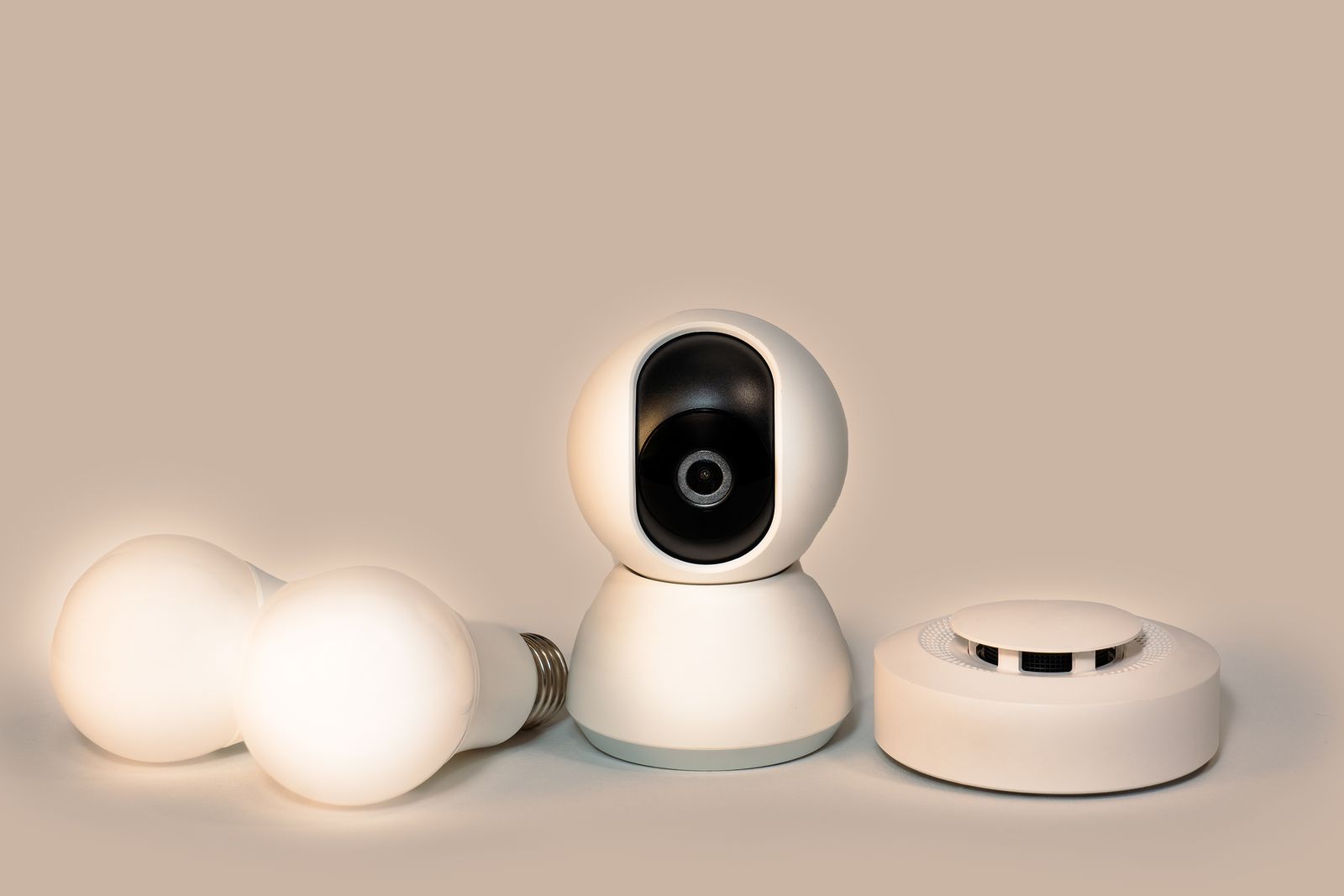
ElderHearth offers general information, not a safety inspection or certification service. This review is based on X-Sense's own product pages and declarations, Intertek's ETL Listed directory, independent testing from Consumer Reports and Reviewed.com, and X-Sense's Better Business Bureau file, checked in September 2026. ElderHearth earns a commission if you buy through the X-Sense link below, at no cost to you; X-Sense had no part in this review.
The question most people bring to this X-Sense review is whether its smoke detectors are UL certified, and the precise answer is: the ones that carry a mark carry Intertek's ETL Listed mark, which certifies them to the same UL 217 smoke alarm and UL 2034 carbon monoxide alarm standards, and X-Sense says so on its own product pages. That is a legitimate certification, accepted by U.S. building codes alongside the UL mark, and it is not the same thing as a UL mark. The second half of the answer is that the mark is not on every model: the SC01, SC06, SC07 and SC07-W carry it, the app-only SC07-MR has been flagged by two independent outlets for lacking it, and Intertek's public directory lists the standalone SD and CD series by name. The company is Chinese, with a U.S. entity in Delaware, and its alarms are made in Guangdong. Everything below is the evidence for those sentences, then what Consumer Reports found when it set the alarms on fire, and which model a family that wants phone alerts should actually buy.
X-Sense Review at a Glance
- Who makes it: X-Sense Electronics Co., Ltd. of Dongguan, Guangdong, China, per its own EU declaration of conformity; the U.S. entity in Intertek's directory and the BBB file is X-SENSE USA LLC, Wilmington, Delaware.
- BBB rating: not rated. The BBB does not rate or handle complaints for businesses located outside the U.S., so the absence of a rating reflects BBB's scope, not a red flag on its own.
- Certification mark: Intertek's ETL Listed mark, to UL 217 (smoke) and UL 2034 (CO). X-Sense's product pages say so in one sentence; the Intertek directory entry names the SD and CD standalone series; the SC01, SC06, SC07 and SC07-W combo alarms carry the mark on their X-Sense and Amazon listings. None of the X-Sense product pages we read claims a UL mark.
- No mark found: the SC07-MR, the app-connected "smart" model with multi-user family alerts, flagged independently by both Reviewed.com and NYT Wirecutter; its own X-Sense product page carried no certification statement when we checked it.
- Consumer Reports: tested the SD01 and SD06 standalone models at 51 out of 100, ranked 16th of 17 smoke alarms tested, with a weak 1-out-of-5 score detecting fast, flaming paper fires (a strong 5-out-of-5 on slow, smoldering fires). The CD07 CO-only detector scored better, 72 out of 100.
- Base station system: the SBS50 connects up to 50 alarms and sensors, including smoke, CO, combo, heat, and water leak sensors, with family-sharing alerts through one app.
- Price: a basic connected smoke-and-CO kit with the base station runs about $129.99 to $139.99.
Is X-Sense a Chinese company, and where are its smoke detectors made?
Yes, and China. The cleanest document is the one X-Sense files for the European market: the SC07-MR's EU declaration of conformity opens "We, X-Sense Electronics Co., Ltd." at "Room 402, Building 4, No. 9, Jinshagang 1st Road, Shixia Village, Dalang Town, Dongguan City" in Guangdong, and declares the alarm's conformity "under our sole responsibility". Dongguan is the manufacturing city next to Shenzhen, where the company's Better Business Bureau file places it; the Delaware address on that file is a registered agent. The BBB carries no letter rating and notes that it does not handle complaints for businesses based outside the United States, which is a limit of BBB's scope rather than evidence about X-Sense either way.
The U.S. side is a company called X-SENSE USA LLC. That is the name on the Intertek certification entry below and on the BBB file, and it is the entity that sells through Amazon, Walmart and x-sense.com. So "who makes X-Sense smoke detectors" has a two-part answer: designed and declared by X-Sense Electronics in Dongguan, sold in the U.S. by X-Sense USA in Wilmington. Country of origin is not a safety verdict in itself; the certification mark is, which is the next section.
Are X-Sense smoke detectors UL certified? ETL Listed, to UL standards
X-Sense alarms do not carry the UL mark. They carry the ETL Listed mark from Intertek, one of the laboratories OSHA recognizes as a Nationally Recognized Testing Laboratory to certify products to UL's published standards, and X-Sense says exactly that on its product pages. The SC07-W's product page puts it in one line: "ETL certification by globally recognized Intertek follows the same rigorous North American safety standards as UL." The same sentence appears on the SC01's standalone page and the SC06-W's interconnected page, next to an ETL badge whose caption names UL 217, ninth edition. The standards in question are UL 217 for smoke alarms and UL 2034 for carbon monoxide alarms, and an alarm tested to them by Intertek satisfies the same code requirement as one tested by UL. The Amazon listing titles for these models describe them as certified to UL 217 and UL 2034; that description rests on the ETL listing, and there is no separate UL listing behind it.
The public record is Intertek's own directory. Its entry for X-Sense is filed under "SINGLE & MULTIPLE STATION SMOKE ALARMS" for X-SENSE USA LLC of Wilmington, Delaware, and covers "Single-Station Battery Operated Photoelectric Smoke Alarms, Model Nos. SD01, SD02, SD03, SD04, SD06, SD07, SD08" and the CD01 through CD08 carbon monoxide alarms, with the finding that "A representative sample of the listed devices have been tested, investigated and found to comply with the requirements of the Standard(s) for Single and Multiple Station Smoke Alarms (UL-217) and are identified with the ETL Listed Mark." That entry is the standalone SD and CD series. The combination SC models are certified to both standards according to X-Sense and its retail listings, and Reviewed.com independently confirmed the mark on the SC07-W; if you want to see the directory entry for a specific SC model before buying, Intertek's directory line for verification requests is on that same page.
How to check the mark yourself, on any brand, including the ones in our home safety for seniors checklist: turn the alarm over. A certified unit has the laboratory's mark, ETL or UL, printed on the back with the standard number, and the box repeats it. A listing that says "meets UL 217" without a laboratory's mark on the product is a claim, not a certification, and that distinction is the whole story of the next model.
The SC07-MR, the app-connected "smart" model built for multi-user family alerts, is different. Its own X-Sense product page carried no certification sentence and no ETL badge when we read it on September 21, 2026, while the SC01, SC06-W and SC07-W pages did. Reviewed.com, the product-testing arm of USA Today, tested it and does not recommend it, specifically because it lacks the safety certification and the labeling that comes with it. The same review also flagged non-critical offline notifications that took over two hours to arrive, a required paid subscription for emergency dispatch service, and a possible compliance issue in states like California that require sealed, non-removable batteries in smoke alarms. For the interconnected, app-based alerting most families actually want, the reviewer points to the certified SC07-W instead.
This is not an isolated finding. In a separate investigation published in late 2025, NYT Wirecutter reported that five of Amazon's top 10 best-selling smoke alarms carried no recognized safety certification, and named X-Sense among the brands involved, pointing specifically to the SC07-MR: the X-Sense website states the model meets UL 217 safety standards, but the physical unit itself carries no certification label to back that claim up. Wirecutter separately confirmed the SC07 and SC07-W do carry a real certification mark, consistent with what their product listings say. Two independent outlets landing on the same model is a stronger signal than either report alone, and it is the reason SC07-MR is the one model in this lineup to actively avoid rather than just approach with caution.
What Consumer Reports Found
Consumer Reports tested the standalone SD01 and SD06 models, both with an LCD display and hush button but no interconnection. Both scored 51 out of 100, ranking 16th out of 17 smoke alarms in that test group. The specific weakness was speed detecting fast, flaming fires with little visible smoke, such as a paper fire, where each scored just 1 out of 5, even though both scored a strong 5 out of 5 on slow, smoldering, wood-fed fires. Consumer Reports recommended competitors like the Kidde 20SA10 and Siterwell GS517 instead, both of which scored well on both fire types. Consumer Reports also notes these particular listings are not in active testing and the score may reflect an earlier testing method, so treat it as a real data point from a real test, not necessarily X-Sense's current-generation performance.
Separately, Consumer Reports' test of the CD07, a standalone CO-only detector with no smoke sensing or smart features, came out meaningfully better at 72 out of 100, with strong detection at both high and low CO concentrations. CO detection is a more straightforward sensing problem than smoke detection, which may explain the gap. For a parent whose furnace or space heater runs all winter, a CO alarm is the one that matters most, which is why it is on our winter safety for seniors list.
The Family Alert System: What It Actually Does
The appeal for families is the SBS50 base station: it connects up to 50 devices, smoke, CO, combo, heat, and water leak sensors included, and lets you add several family members to one app so everyone gets notified the moment an alarm sounds anywhere in the system, not just whoever is home. There is also an optional AI Smart Alerts subscription, available in the U.S., Germany, and the U.K., that sends an SMS or phone call if no one acknowledges the app notification. On X-Sense base station price: a basic SBS50 kit with a few connected sensors runs about $129.99 to $139.99, before adding extra detectors.
An independent hands-on review of the SBS50 system called the setup simple and the app clean, with a loud alarm (about 100 dB from the base station, 85-plus dB from individual detectors), but found the wireless link between units and the base station dropped in a roughly 1,000-square-foot basement with metal stud walls, despite a claimed open-air range of over 1,600 feet. In practice, that means placement and your home's construction matter as much as the spec sheet, and it is worth testing connectivity during any return window before you consider the system fully installed.
X-Sense Review: Which Model to Buy, and Which to Skip
| Model | Certification mark | Best for | Verdict |
|---|---|---|---|
| SC07-W | ETL Listed to UL 217 and UL 2034; confirmed by Reviewed.com | Interconnected smoke and CO with app alerts | Buy: the certified choice for family alerts |
| SC01 / SC06 / SC07 | ETL Listed to UL 217 and UL 2034, per X-Sense and its listings | Simple standalone smoke and CO | Buy: solid basics if you do not need app alerts |
| CD07 | In Intertek's directory (CD series, UL 217 entry); CR score 72/100 | CO-only detection | Reasonable, tested decently by Consumer Reports |
| SC07-MR | No mark found on the unit or its product page | App-based family alerts | Skip: choose SC07-W instead |
| SD01 / SD06 | In Intertek's directory (SD series), but weak in CR's flaming-fire test | Standalone with LCD display | Skip or verify current testing before buying |
If you want the family-alert features covered earlier in our smart home devices guide, the SC07-W paired with the SBS50 base station is the combination that is both certified and interconnected. In an X-Sense SC07-W vs SC07-MR comparison, that certification gap is the whole decision: the W carries the ETL mark, the MR does not. Confirm the mark and the standard numbers are printed on the specific box before you buy, since it is not automatic across the lineup.
Where to buy them: direct from X-Sense, which sells the SC07-W in packs sized for a whole house and the SC01 as a single unit for a parent's bedroom or hallway, and which, per its about page, backs them with a five-year warranty and a sixty-day money-back guarantee. Buying direct also removes the seller question that comes with a marketplace listing. The same models are on Amazon; if you buy there, check that the seller is X-Sense itself, and compare the two prices on the day, since they move.
Frequently Asked Questions
Are X-Sense smoke detectors UL certified? They are ETL Listed by Intertek to the UL 217 smoke alarm and UL 2034 carbon monoxide alarm standards, which building codes accept the same way as a UL mark, but they do not carry the UL mark itself. The SC01, SC06, SC07 and SC07-W carry the ETL mark; Intertek's directory lists the SD and CD standalone series; the SC07-MR has no mark that we or two independent reviewers could find.
Is X-Sense a Chinese company? Yes. Its EU declaration of conformity is signed by X-Sense Electronics Co., Ltd. of Dongguan, Guangdong, China, and its U.S. sales entity is X-SENSE USA LLC in Wilmington, Delaware, the name on both the Intertek directory entry and the BBB file.
Where are X-Sense smoke detectors made? In Guangdong province, China. The manufacturer of record on the EU declaration is in Dongguan City, and the BBB file places the company in Shenzhen, the neighboring city. The Delaware address is a registered agent, not a factory.
Is X-Sense a good brand? It is a real, established smoke and CO alarm maker with a wide product line and generally functional app and hardware. The honest answer depends on the model: its ETL-certified interconnected alarms like the SC07-W test out reasonably, while its unmarked smart model and some standalone models tested poorly on independent fire-detection tests.
What is the X-Sense SBS50 base station? It is a hub that connects up to 50 X-Sense smoke, CO, combo, heat, and water leak sensors, and pushes alerts to everyone you add to the app when any device triggers. A basic kit with the base station runs about $129.99 to $139.99.
Does X-Sense require a subscription? Core alerts through the app do not require a subscription. An optional AI Smart Alerts add-on, which sends SMS or phone-call alerts if no one acknowledges the app, is a paid subscription available in the U.S., Germany, and the U.K.
A Last Word
X-Sense is a large catalog of similarly-named models with real differences in testing and certification, and that is the actual finding of this X-Sense review: the brand name tells you less than the model number does. Before you buy any smoke or CO alarm, for this brand or another, look for a laboratory mark, ETL or UL, with UL 217 and UL 2034 printed beside it on the back of the unit and on the box; and if you want family alerts, the SC07-W is the combination this research points to over the unmarked SC07-MR.
For the full picture of smart devices that help an aging parent stay independent, see our smart home devices for seniors guide. You are welcome to write to us either way.
Sources
- X-Sense, product pages for the SC07-W, SC01, SC06-W and SC07-MR (certification statements as read on September 21, 2026), and EU Declaration of Conformity, SC07-MR (manufacturer name and address).
- Intertek, ETL Listed Directory entry for X-SENSE USA LLC (SD and CD model series, UL 217, ETL Listed Mark).
- Better Business Bureau, X-Sense profile (not rated, business scope).
- Consumer Reports, X-Sense SD01 (score, flaming-fire test).
- Consumer Reports, X-Sense SD06 (score, flaming-fire test).
- Consumer Reports, X-Sense CD07 (CO detection score).
- Reviewed.com, X-Sense SC07-MR review (UL certification finding, verdict).
- Techlicious, reporting on NYT Wirecutter's investigation into uncertified smoke alarms sold on Amazon (X-Sense named among affected brands; Wirecutter's original article is behind a wall we could not access directly).
- The Gadgeteer, X-Sense SBS50 base station review (connectivity, price, features).