
Aging in Place: A Practical 2026 Guide to Helping a Parent Stay Home Safely
Aging in place means staying in your own home as you age. What it really costs, how to make a home safe, who helps pay, and when it stops being right.

ElderHearth offers general information, not medical, legal, or financial advice. Consult the right professional about your parent's specific situation.
Almost everyone I talk to wants the same thing for their parent: to help them stay in their own home as long as it's safe. That's aging in place, and it's what most older adults want too. In AARP's 2024 Home and Community Preferences Survey, 75% of adults 50 and older said they want to remain in their current home as they age, one of many aging in place statistics worth knowing. The wish is nearly universal. The plan is what most families lack. This guide walks through the whole picture: what aging in place really costs, how to make a home safe, who helps pay, and how to know when it's no longer the right choice.
What does aging in place mean?
Aging in place means continuing to live in your own home and community as you grow older, instead of moving to assisted living or a nursing home. The National Institute on Aging uses the term for staying in the home you already have, with whatever changes, equipment, and help make that safe over time.
It doesn't mean managing entirely alone. A good aging-in-place plan usually combines a safer home, some outside help, and a clear sense of the medical and financial picture. Done well, it's not about avoiding care, it's about bringing the right care to the home.
Is aging in place cheaper than assisted living? The honest cost picture
This is where families most want a straight answer, so here it is: aging in place is usually cheaper when your parent needs only a little help, and it can become more expensive than a facility once they need a lot.
Typical monthly costs side by side (assisted living and nursing home are CareScout 2025 medians; home-care figures are estimated from hourly rates):
| Option | Typical monthly cost |
|---|---|
| Home aide, part-time (~20 hrs/week, estimated) | about $2,400 to $2,800 / month |
| Home aide, full-time (~44 hrs/week) | about $6,700 / month |
| 24/7 live-in home care | $15,000+ / month |
| Assisted living (national median) | about $6,200 / month |
| Nursing home (private room) | about $10,800 / month |
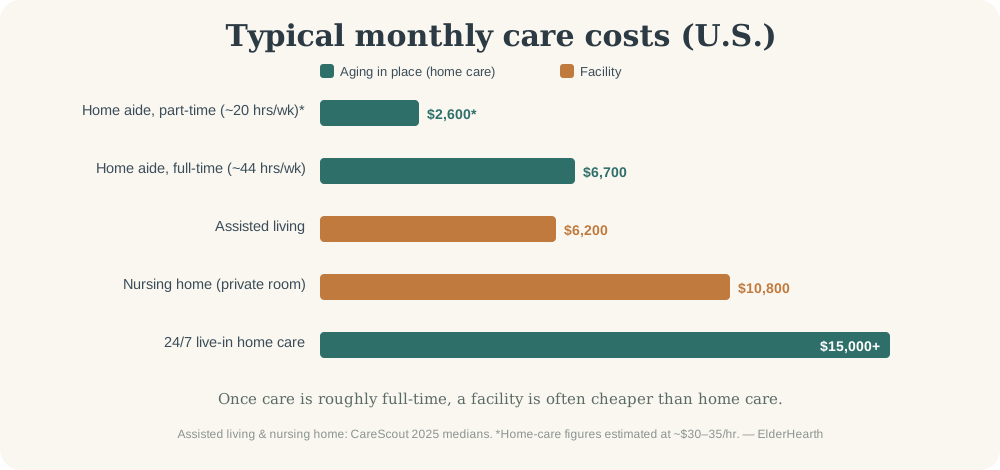
A home aide runs roughly $30 to $35 an hour. So a few hours of help a day costs far less than assisted living, but the crossover comes sooner than expected: by the time a parent needs roughly full-time help (about $6,700 a month), it has already passed assisted living (about $6,200), and 24/7 live-in care (~$15,000+) far exceeds it. The rule of thumb: light or part-time help, home wins on cost; once care is roughly full-time, a facility often wins. Run the real hours for your parent before you assume aging in place is the cheaper path: our aging in place cost calculator does it instantly and shows your crossover point. (For the full decision, see aging in place vs assisted living.)
How can you lower the cost of aging in place?
The biggest savings rarely come from a cheaper aide. They come from using help that already exists and from spreading care across more than one source. A few levers that move the number the most:
- Check who-pays programs before you pay out of pocket. Medicaid Home and Community-Based Services (HCBS) waivers can cover in-home care and home modifications for those who qualify, veterans may tap VA benefits, and some Medicare Advantage plans now include limited in-home support. Our guide to who pays for home modifications walks through each one.
- Use an adult day program instead of round-the-clock aides. Adult day care runs about $95 a day (CareScout 2025), roughly $2,000 a month for weekday care, against about $6,700 for a full-time in-home aide. It also covers the daytime hours a working family caregiver cannot.
- Mix paid help with family and respite care. Cover the hardest hours with a paid aide and the rest with family. Respite programs and your local Area Agency on Aging can fill gaps cheaply or for free.
- Get paid as a family caregiver. Many state Medicaid programs run consumer-directed or self-directed care that will pay a family member to provide the hands-on help, which keeps money in the household. Our guide to how to get paid to care for an elderly parent walks through every program and who qualifies.
- Call the Eldercare Locator at 1-800-677-1116. This free service from the federal Administration for Community Living connects you to local low-cost or no-cost help: meal delivery, transportation, friendly-visitor programs, and benefits screening.
- Save on supplies and modifications. Reusable incontinence products cost less over time than disposables, and nonprofits like Rebuilding Together and Habitat for Humanity, alongside Medicaid and VA grants, can discount or cover home changes.
- Ask about tax breaks. Out-of-pocket medical and care costs may be tax-deductible, and a parent may qualify as your dependent. Check the specifics with a tax professional.
The four parts of an aging-in-place plan
Most successful plans cover the same four areas. Skip one and it's usually the one that ends the arrangement. For a printable version you can work through line by line, see our full aging in place checklist.
1. Make the home safe
Falls are the biggest threat to staying home: the CDC reports that more than one in four older adults falls each year. Start with the bathroom and the stairs, where most serious falls happen. Practical first steps include grab bars, better lighting, a shower chair, and the right mobility aid; our guides to room-by-room home safety and the home modifications that matter most cover the specifics. If your parent resists a walker, that's its own challenge, and we wrote a full guide on how to convince a parent to use a walker.
2. Plan how you'll pay for changes and equipment
Big-ticket items like stair lifts and walk-in tubs aren't covered by Original Medicare, but Medicaid waivers, VA grants, and some Medicare Advantage plans can help. We break the funding down item by item:
- Does Medicare cover stair lifts? (and every other way to pay)
- Does Medicare cover lift chairs?
- Does Medicare cover walk-in tubs?
3. Line up day-to-day support
Beyond the house itself, look at the daily gaps: meals, medications, transportation, and companionship. Grocery and meal delivery, an automatic pill dispenser, ride services, and a few hours of in-home help a week each close a gap that might otherwise force a move. Your local Area Agency on Aging can connect you to many of these, often free or subsidized. To find yours, call the Eldercare Locator at 1-800-677-1116, a free national service from the federal Administration for Community Living, or search eldercare.acl.gov.
4. Watch for the line where it's no longer safe
Aging in place works until it doesn't, and the shift is often gradual. Know the warning signs in advance so you can act early rather than in a crisis. We cover them in detail in 12 signs it's no longer safe for a parent to live alone.
How to start aging in place
You don't have to solve everything at once. A workable order:
- Get a professional read. Ask your parent's doctor for a referral to an occupational therapist for a home safety and mobility assessment. It removes the guesswork and the family arguments.
- Fix the cheap, high-impact things first. Grab bars, lighting, non-slip mats, and a medication system cost little and prevent the most common emergencies.
- Price the big changes and their funding before you commit, using the guides above.
- Add support gradually, starting with a few hours a week, so it feels like help rather than a takeover.
- Revisit the plan every few months, or after any fall or hospital stay.
When aging in place isn't the right answer
Honesty matters here too. Sometimes home stops being the safe or affordable choice: repeated falls despite changes, dementia with wandering, or a need for 24/7 care that costs more at home than in a facility. Choosing more care at that point isn't failure. It's the same love, making a harder call. A geriatric care manager can help you weigh the options without the guilt.
Frequently Asked Questions
What is aging in place? Aging in place is continuing to live in your own home and community as you grow older, rather than moving to assisted living or a nursing home, usually with home modifications and some support added over time.
How much does it cost to age in place? It depends on how much help is needed. In 2026 a home aide runs about $30 to $35 an hour, so part-time help is roughly $2,400 to $2,800 a month, while 24/7 live-in care can exceed $15,000 a month.
Is aging in place cheaper than a nursing home? Usually yes when help is light. A nursing home runs around $10,800 a month in 2026, so part-time home care costs far less. But 24/7 home care can cost more than a facility.
Does Medicare pay for aging in place? Original Medicare does not pay for the day-to-day, non-medical help (often called custodial care) that aging in place usually needs, and it does not cover home modifications like stair lifts or walk-in tubs. It can cover limited skilled home health care when a doctor orders it and you qualify. Medicaid waivers, VA benefits, and some Medicare Advantage plans may help with the rest. See does Medicare cover stair lifts? for the full funding picture.
What are the disadvantages of aging in place? The main ones are the cost of round-the-clock care, the risk of isolation, and the need to keep adapting the home and plan as needs change. We weigh both sides fully in the pros and cons of aging in place.
A last word
Aging in place is the choice most families want, and with a clear plan it's often the right one. Make the home safe, sort out who pays for the bigger changes, bring in support before it's urgent, and stay honest about the day it might no longer fit. Do that, and your parent gets what they wanted most: more good years in the home they love.
If you are trying to figure out where to begin for your own parent, you are welcome to write to us; we read every message.
Sources
- AARP, 2024 Home and Community Preferences Survey.
- National Institute on Aging, Aging in Place: Growing Older at Home.
- Cost-of-care medians, CareScout 2025 Cost of Care Survey (assisted living and nursing home; home-care figures estimated from hourly rates).
- CDC, Facts About Falls.