
Aging in Place vs Assisted Living: How to Decide (2026)
Aging in place vs assisted living: an honest cost comparison and a clear way to decide, including when staying home works and when a facility is safer.

ElderHearth offers general information, not medical or financial advice. A geriatric care manager or your parent's doctor can help you weigh the specifics.
Almost every family lands on the same hard question: should a parent stay in their home, or move to assisted living? Most older adults want to stay, in AARP's 2024 survey, 75% said so (see more aging in place statistics), but aging in place vs assisted living isn't about what's nicer; it's about what's safe, sustainable, and affordable for your parent. This is an honest comparison and a clear way to decide.
Aging in place vs assisted living: the honest cost picture
Cost surprises a lot of families, in both directions. The rule of thumb: home care is cheaper when help is light or part-time, but a facility is often cheaper once a parent needs roughly full-time care.
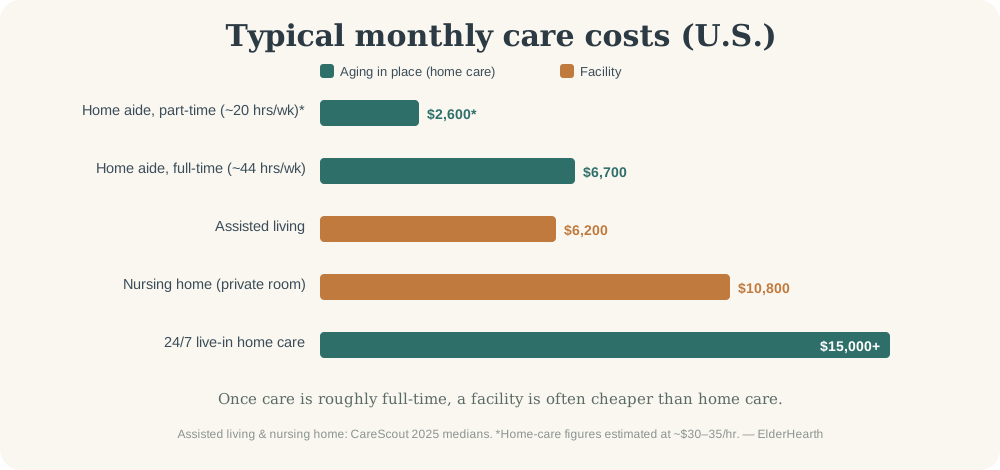
A few hours of help a day costs far less than a facility. But the crossover comes sooner than most families expect: by the time a parent needs roughly full-time paid help (about $6,700 a month), it has already edged past assisted living (about $6,200), and 24/7 live-in care (~$15,000+) far exceeds it. So run your parent's actual hours before assuming home is cheaper. Our aging in place cost calculator does that math for you and shows where the crossover lands. For state-specific prices, see the cost of senior care in Tennessee. (Our aging in place guide breaks the home-care costs down further.)
One costly misconception to clear up: Medicare does not pay for long-term assisted living or ongoing custodial home care. Medicaid may, for those who qualify, traditionally for nursing-home care and, increasingly, for home care through state waivers.
The factors that should drive the decision
Cost is only one input. Weigh these together:
- Level of care needed. Light help with chores and meals points home; heavy daily personal care or skilled nursing points to a facility.
- Safety. Repeated falls, medical emergencies, or trouble managing medications are warning signs. A home can be made safer (see home safety), but a facility has staff monitoring around the clock.
- Memory and cognition. Mild forgetfulness can work at home with support; progressive dementia with wandering usually needs supervision a home can't easily provide.
- Social connection. Home can mean isolation, which harms health; assisted living has built-in company, meals, and activities.
- Caregiver capacity. Be honest about what family can sustain without burning out.
- The home itself. Stairs, layout, and how affordably it can be adapted.
When aging in place works well
Staying home tends to be the right call when needs are light to moderate, the home can be made safe affordably, reliable help can be arranged, finances favor it, and your parent stays socially connected. With those in place, home usually wins on both happiness and cost. For a fuller look at staying home on its own terms, see the pros and cons of aging in place. Some families find a middle path in moving a parent into their own home, which keeps them out of a facility while sharing the daily load.
When assisted living is the better choice
Sometimes a move is the safer, kinder option, and choosing it isn't failure. Lean toward assisted living when:
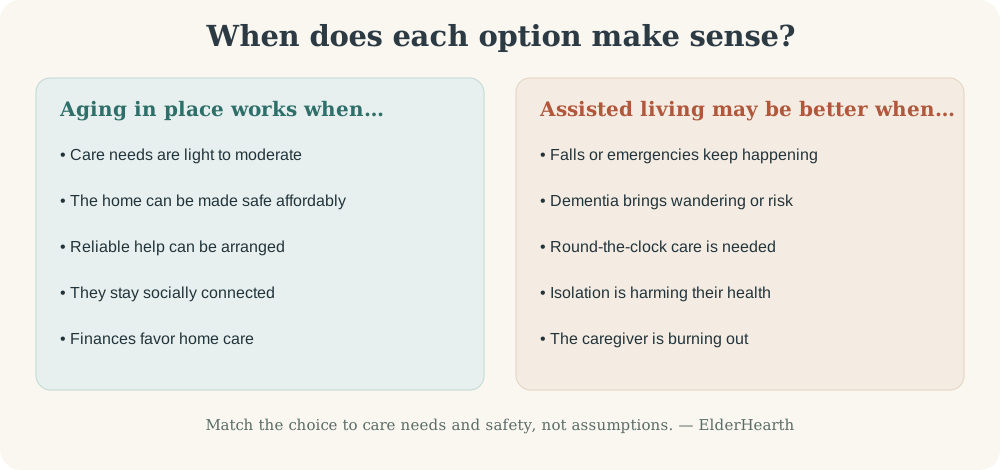
- Falls or emergencies keep happening despite home changes.
- Dementia brings wandering or unsafe behavior.
- Your parent needs round-the-clock care (often cheaper in a facility than at home).
- Isolation is genuinely harming their health.
- The family caregiver is burning out.
If you're seeing several of these, our guide to 12 signs it's no longer safe to live alone can help you gauge it.
How to decide between aging in place and assisted living
- Get an objective needs assessment. Ask your parent's doctor or a geriatric care manager to assess care needs and safety, rather than guessing.
- Run your parent's real numbers, the actual hours of help needed, against assisted living in your area.
- Tour a community or two so the comparison is concrete, not imagined.
- Involve your parent in the decision as much as possible; it's their life and their dignity.
- Revisit the plan after any fall, hospital stay, or change. The right answer can change over time.
Frequently Asked Questions
Is aging in place cheaper than assisted living? When help is light, yes: part-time home care runs far less than assisted living (about $6,200 a month). But it crosses over sooner than people expect, by full-time care (about $6,700) it has already edged past assisted living, and 24/7 live-in care (~$15,000+) far exceeds it. It depends on how much care is needed.
When should someone move to assisted living? Consider it when there are repeated falls or emergencies despite home changes, dementia with wandering, a need for round-the-clock care, harmful isolation, or caregiver burnout.
What are the disadvantages of aging in place? The cost of round-the-clock care, the risk of social isolation, and the ongoing need to adapt the home and arrange help as needs change.
Is assisted living better for dementia? Mild memory issues can be managed at home with support, but progressive dementia with wandering or unsafe behavior often needs the supervision an assisted living or memory-care community provides.
A last word
Aging in place vs assisted living comes down to matching the choice to your parent's real care needs, safety, finances, and social life, not to anyone's assumptions. Make the home work when it safely can, and choose a community without guilt when that's what safety asks. Decide with the facts, a professional assessment, and your parent's own voice, and revisit it as things change. Either way, the goal is the same: their safety and dignity in the years ahead, ideally at home for as long as it fits.
If you are weighing this decision for your parent, you are welcome to write to us; we read every message.
Sources
- AARP, 2024 Home and Community Preferences Survey.
- Cost-of-care medians, CareScout 2025 Cost of Care Survey (assisted living and nursing home figures; home-care costs estimated from hourly rates).
- National Institute on Aging, Aging in Place.