
When an Elderly Parent Refuses Help: A Calm, Practical Guide (2026)
When an elderly parent refuses help, pushing harder backfires. Why they resist, what to say, how to start small, and when safety must come first.

ElderHearth offers general information, not medical or legal advice. For questions about a parent's decision-making capacity, consult their doctor and an elder-law attorney.
Few things wear a family down like watching a parent struggle and refuse every offer of help. If your elderly parent refuses help, the instinct is to push harder, and that almost always backfires. The calmer truth is this: you usually can't force a capable adult, but you can change how the conversation goes. This guide shows how to lower the resistance while protecting both their safety and their dignity.
Why your elderly parent refuses help
This is rarely stubbornness for its own sake. Underneath, it's almost always about fear of losing control. For your parent, independence equals dignity, and accepting help can feel like admitting they can no longer manage, the first step toward losing their home, their privacy, their say in their own life.
Once you see the refusal as fear, not defiance, your whole approach can soften, and that's what actually moves people.
What not to do
A few moves that reliably backfire:
- Arguing or lecturing. It turns a worry into a power struggle.
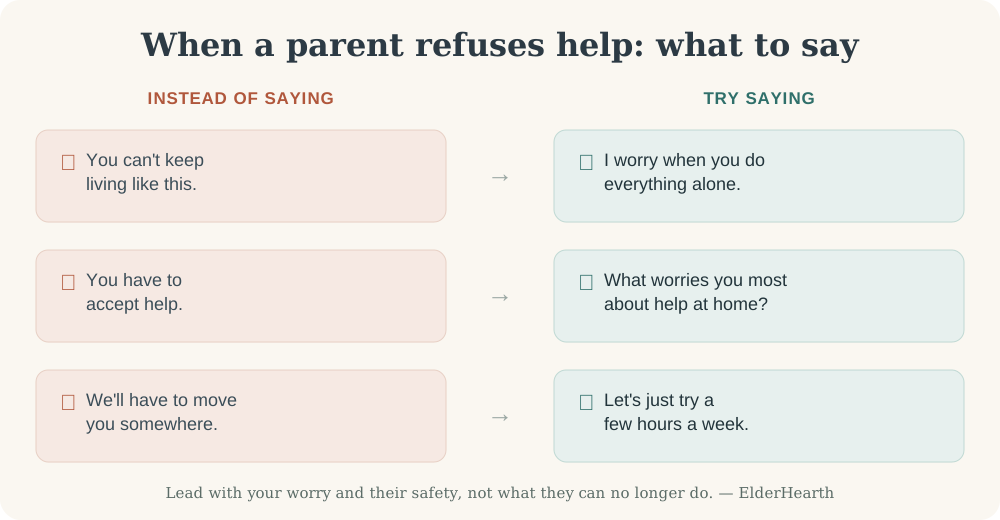
- Threatening ("if you don't, we'll have to move you somewhere").
- Taking over and making decisions around them, which confirms their worst fear.
- Springing it on them in a crisis instead of a calm moment.
How to talk to an elderly parent who refuses help
The goal is to make help feel like their choice and your relief, not a verdict on their abilities:
- Listen first, with open questions. "What worries you most about having someone help at home?" Then let them answer without interrupting.
- Frame it around your needs, not their failings. "Dad, I worry when you do everything alone. Someone coming by a couple of times a week would give me peace of mind." Help-for-the-family is far easier to accept than help-because-you-can't-cope.
- Lead with safety, not incapacity. Talk about preventing a fall or staying on top of medications, not about what they can no longer do.
- Give them time. Unless safety is urgent, let them sit with it and feel ownership of the decision.
Start small and build
Don't open with full-time care. Suggest a few hours a week for low-stakes tasks, light cleaning, a meal, errands, or a ride. Gradual exposure lets your parent get comfortable with a helper and warm up to more later. A small "yes" is worth more than a big argument.
Let a doctor make the case
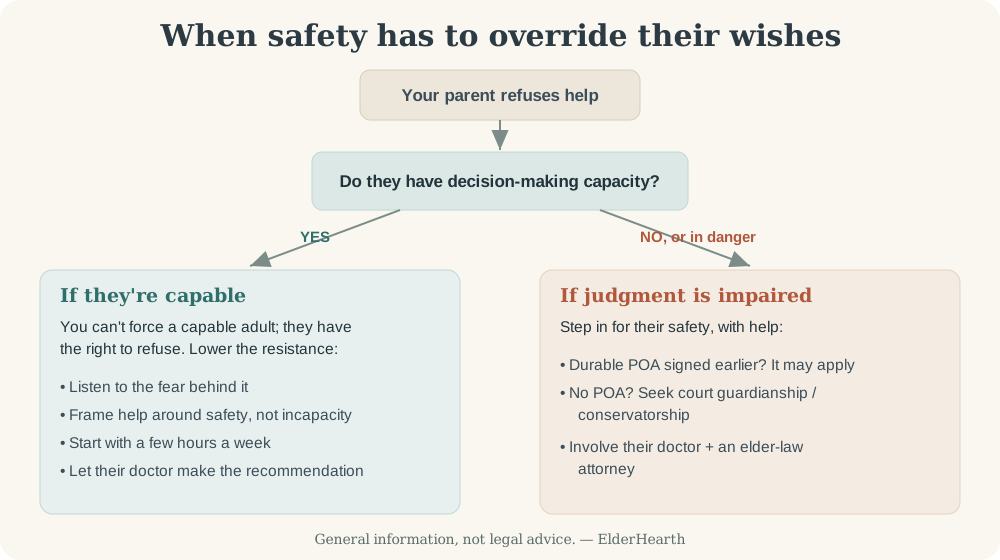
One quietly powerful lever: a doctor's recommendation carries more weight than a child's. Many older adults will accept from "the doctor's orders" what they'll reject from family. Ask the physician to raise the need for help or an assessment, then you can refer to it as a prescribed service rather than your idea.
When safety has to override their wishes
Honesty matters here. You cannot force help on a parent who is competent to make their own decisions, even unwise ones. A capable adult has the right to refuse.
That changes only when there are real signs their judgment is impaired, for example with dementia, or when they are in genuine danger. At that point, who can step in depends on what was arranged in advance: if your parent earlier signed a durable power of attorney (while they still had capacity), it may already authorize someone to act; if not, the route is usually applying to a court for guardianship or conservatorship. This is exactly why planning early matters, and it's a conversation for their doctor and an elder-law attorney, not a decision to make alone. (If you're weighing whether it's still safe, see 12 signs it's no longer safe to live alone.) Choosing to act when you must isn't betrayal. It's love making a hard call.
Take care of yourself too
This is exhausting, often heartbreaking, caregiving. Resistance can make you feel helpless and resentful, which is normal. Lean on siblings, your parent's doctor, your local Area Agency on Aging, and respite help. You can't pour from an empty cup.
Frequently Asked Questions
What do you do when an aging parent refuses help? Lead with empathy: understand the fear behind the refusal, listen, frame help around your peace of mind and their safety, start with just a few hours a week, and let a doctor make the recommendation.
Can you force an elderly parent to accept help? No, not if they're mentally competent; they have the right to refuse. That changes only if their decision-making is impaired or they're in danger, when legal options like guardianship may apply, guided by a doctor and an elder-law attorney.
How do I get a stubborn parent to accept care? Start small, frame it as help for the family rather than a sign they can't cope, and enlist their doctor, whose word often carries more weight than yours.
When can you override an elderly parent's decisions? Generally only when they lack the capacity to make safe decisions (such as with dementia) or face serious danger. Capacity is a medical and legal determination, so involve their doctor and an attorney.
A last word
When an elderly parent refuses help, the way through isn't more force, it's less. Understand the fear, talk to their wishes instead of over them, start small, and let the doctor carry the medical message. Hold the line on safety when you truly must, and be as gentle with yourself as with them. Done this way, accepting help stops feeling like surrender and starts feeling like what it is: the thing that lets them keep living at home a while longer.
If you're stuck in this exact standoff, you don't have to face it alone. You can reach out and we'll listen.