
How to Organize an Elderly Parent's Medications: A Caregiver's Safety System
How to organize an elderly parent's medications: build a master list, choose a pill organizer or blister pack, and store and dispose of pills safely.
ElderHearth offers general information, not medical advice. Never start, stop, or change a dose on your own; decisions to reduce or change medications belong to your parent's doctor. Your pharmacist is a free expert for the how-to questions below.
A pile of orange bottles on the counter is how dosing mistakes happen, and missed and doubled doses send a lot of older adults to the hospital. The fix is not willpower; it is a system. Managing an aging parent's medications safely comes down to knowing how to organize an elderly parent's medications: one master list, the right organizing tool, safe storage, safe disposal, and a regular review to thin the pile. This guide shows how to build each, with your pharmacist as your free expert.
How to organize an elderly parent's medications: start with one list
Before any pillbox, make a single, current list of everything your parent takes: every prescription, plus over-the-counter drugs, vitamins, and supplements, which interact too. For each, note the name, dose, what time it is taken, what it is for, and who prescribed it. Keep it on the fridge and a copy in your phone, and bring it to every appointment.
The most powerful version of this is the brown bag review. Once or twice a year, put every bottle your parent takes, prescription and otherwise, into a bag and bring it to their doctor or pharmacist. They check for duplicates, dangerous combinations, and drugs that can now be stopped. It is the single best way to catch problems hiding in a long list.
How to keep track of medications for an elderly parent: pill organizer, blister pack, or dispenser
The right organizer depends on how many medications there are and how reliably your parent manages them. The pill organizer vs blister pack question really comes down to who fills it and how foolproof it needs to be.
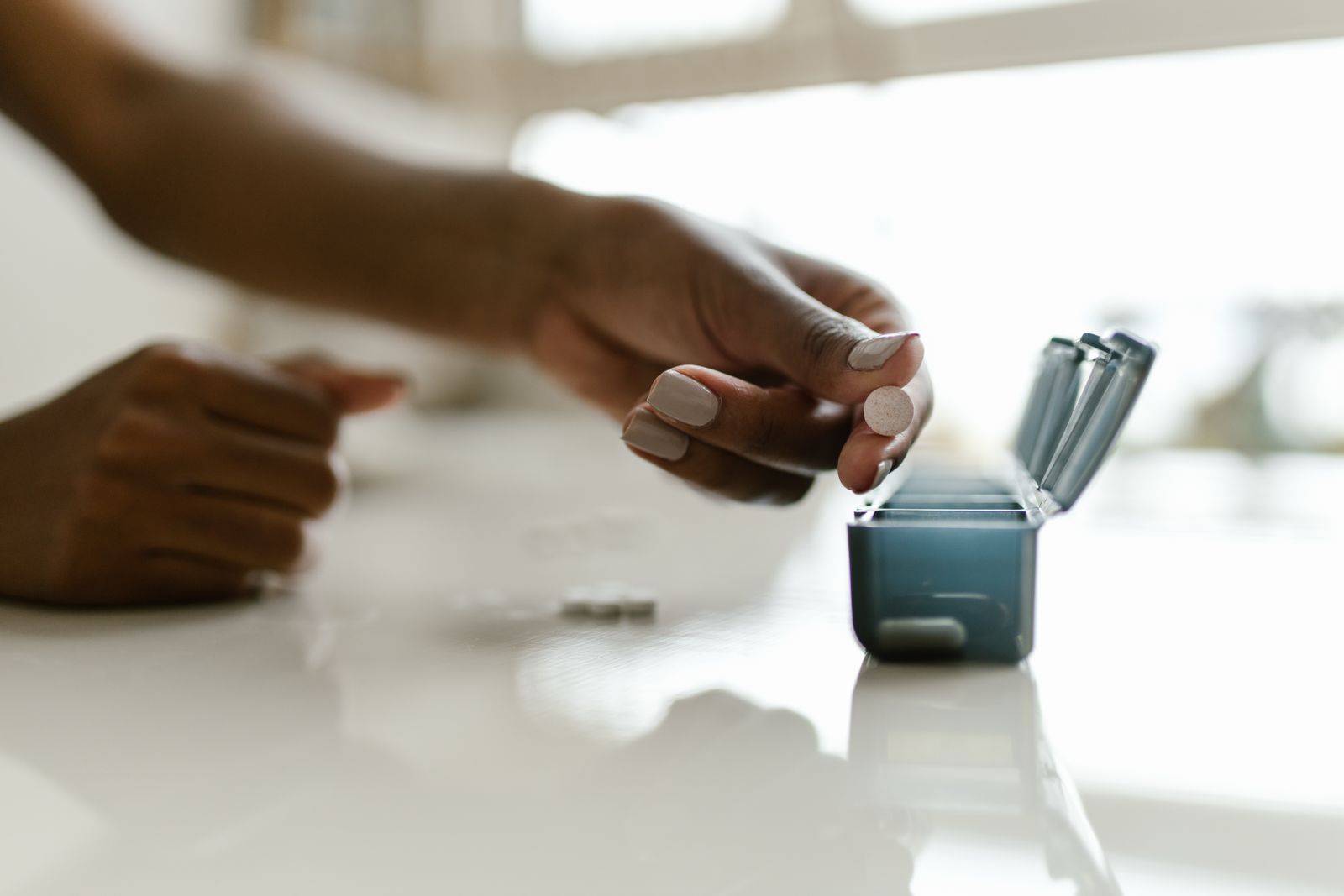
- A weekly pill organizer (dosette box). A simple plastic box with a compartment per day, often with morning/noon/evening slots. Cheap and fine when the list is short and someone reliable fills it. The risk is human error in the filling.
- Pharmacy blister packs (compliance packaging). Your pharmacy pre-sorts every dose into sealed, dated blister packs, so each pocket holds exactly what to take at that time. This removes the filling error, and the evidence is good: a systematic review and meta-analysis by Conn and colleagues found that packaging like this measurably improves how reliably medications get taken. Many pharmacies offer it free or cheaply, and it is often the best choice once there are several medications.
- Automatic pill dispensers. A device that holds the pills, alarms at each dose time, and releases only the right dose. These suit a parent with dementia or many timed medications, or when you are managing from a distance, some can alert you if a dose is missed.
Use your pharmacist, your most underused resource
Your pharmacist is free, expert, and usually glad to help. Ask them to fill blister packs, sync all refills to the same date so you make one trip, provide easy-open caps and large-print labels, and flag interactions. Using a single pharmacy for everything is itself a safety step, because they can see the whole list and catch conflicts no one else will.
Store medications safely
Where pills live matters more than people think. Keep them in a cool, dry place, not the bathroom, where heat and humidity break many drugs down. Keep the master list nearby. And if your parent has any confusion or dementia, lock the medications up and manage doses yourself, because the danger then is not forgetting a pill but taking it twice, or taking the wrong one. Keep everything out of reach of visiting grandchildren too.
How to safely dispose of old medications
Old and discontinued medications are a quiet hazard: they invite confusion about what to take and are a risk if swallowed by the wrong person. Clear them out, the right way:
- Best option: a drug take-back program. Many pharmacies and police stations have drop-off boxes, and the DEA runs take-back days. The FDA can point you to a location near you.
- The FDA "flush list." A short list of especially dangerous medicines, mostly strong opioids like fentanyl patches and oxycodone, should be flushed down the toilet right away if no take-back is available, because a single dose can kill a child or pet.
- Everything else: mix it with something unappealing like coffee grounds or cat litter, seal it in a bag, and put it in the trash. Scratch out the name on the empty bottle before recycling.
What to do if a parent takes too many medications: high-risk interactions
Some medications are riskier for older bodies, and more pills means more ways they can clash. The American Geriatrics Society publishes the Beers Criteria, a list of medications that are often inappropriate for adults over 65, including some sedatives, sleep aids, anticholinergics, and others. You do not need to memorize it. You need to know it exists and ask about it.
Sleep medication is where this comes up most often, because it is the request that starts casually and ends up on the daily list for years. What the evidence supports, and what to try first, is in sleep aids for the elderly.
Two practical moves: watch for medication interactions in older adults by keeping that complete list (including OTC drugs and supplements) and running it past one pharmacist, and ask the doctor at each review whether any medication can be stopped. Taking many drugs at once, what doctors call polypharmacy, raises the risk of falls, confusion, and interactions, so trimming the list when a doctor agrees it is safe (an approach called deprescribing) is often the single biggest safety win. Never stop a medication on your own, though; some are dangerous to quit abruptly.
Practical tips for giving medications
- Do not crush every pill. Extended-release and coated tablets can become dangerous if crushed. Ask the pharmacist which of your parent's pills can be crushed or opened, and which cannot.
- Handle a missed dose by the rule, not a guess. Do not automatically double up; ask the pharmacist or check the label for what to do if a dose is missed.
- Follow the food instructions. Some drugs need food, some need an empty stomach, and it changes how well they work.
- Set the routine to existing anchors, like meals or bedtime, so doses ride on habits your parent already has.
How to organize an elderly parent's medications: a quick recap
A safe system comes down to five habits:
- Keep one master list of everything, including over-the-counter drugs and supplements. Antacids belong on it too, since some of them are calcium and are easy to take twice over.
- Let the pharmacy sort the doses into blister packs once there are several medications.
- Store pills cool and dry, and locked up if there is any confusion.
- Dispose of old medications through a take-back program.
- At every review, ask what can safely be stopped.
The organizer itself, and the lit magnifier that belongs beside the bottles, are two of the tools in our guide to daily living aids for elderly parents.
Frequently Asked Questions
What is the safest way to organize an elderly parent's medications? Start with one master list of everything they take, then use a pharmacy blister pack or an automatic dispenser rather than a hand-filled pillbox once there are several medications, since those remove filling errors. Store pills in a cool, dry place, lock them up if there is any confusion, and have a pharmacist review the full list regularly.
Pill organizer or blister pack: which is better? A simple pill organizer is fine for a short list filled by a reliable person. Pharmacy blister packs, where the pharmacy pre-sorts each dose, remove the risk of filling errors and measurably improve how reliably medications are taken, so they are usually the better choice once there are several pills. Automatic dispensers add alarms and dose control for dementia or many timed medications.
How do I safely dispose of old medications? Use a drug take-back program at a pharmacy or police station whenever possible. Flush only the medicines on the FDA flush list (mostly strong opioids) if no take-back is available. Mix everything else with coffee grounds or cat litter, seal it in a bag, and throw it away.
What is a brown bag medication review? It is when you put every medication your parent takes, prescription, over-the-counter, and supplements, into a bag and bring it to their doctor or pharmacist once or twice a year. They check for duplicates, interactions, and drugs that can be stopped. It is the best way to catch hidden problems in a long medication list.
A last word
Knowing how to organize an elderly parent's medications is one of those caregiving skills that quietly prevents emergencies: the system you build is what stands between a long medication list and a dangerous mistake. Make the one list, let the pharmacy do the sorting, store and dispose of pills safely, and use every review to ask what can come off the list. None of it requires medical training, only a system and a pharmacist on your side, and it protects your parent's safety as surely as anything in the home.
If you would rather not think it through alone, you are welcome to write to us; we read every message.
Sources
- U.S. Food and Drug Administration, Disposal of Unused Medicines and the Flush List.
- CDC, Medication Safety: Adverse Drug Events (older adults are far more likely to be hospitalized for adverse drug events, including from taking too much).
- American Geriatrics Society, 2023 Updated AGS Beers Criteria for Potentially Inappropriate Medication Use in Older Adults, Journal of the American Geriatrics Society, 2023;71(7):2052-2081.
- National Institute on Aging, Safe Use of Medicines for Older Adults.
- Conn VS, et al., Packaging Interventions to Increase Medication Adherence: Systematic Review and Meta-Analysis, Current Medical Research and Opinion, 2015;31(1).