
Best Lift Chairs of 2026: An Honest Comparison for Aging in Place
An honest 2026 guide to the best lift chairs: 2-position vs infinite, the right size, easy-clean fabrics, power-outage facts, and what Medicare really pays.

The brands compared at a glance
1
Pride VivaLift! Power Lift ReclinersFeature-rich comfort with heat and power adjustments
- Infinite, zero-gravity, and lay-flat recline
- Around 400 lb capacity
- Power headrest and lumbar; heat
- Easy-clean Sta-Kleen fabric option
2
Golden MaxiComfort Lift ChairsFeet-above-heart positioning for swollen legs
- Infinite and patented zero-gravity (Twilight Tilt)
- 300 to 600 lb across models
- Multi-zone recline
- Easy-clean Brisa polyurethane option
3
La-Z-Boy Power Lift ReclinersFamiliar furniture styling that blends in
- Power lift with zero-gravity recline
- Up to about 350 lb
- Wall-hugging design
- Battery backup
4
Mega Motion Lift ChairsQuiet operation at a lower price
- 3-position and infinite (some zero-gravity)
- About 325 to 500 lb
- Pocketed-coil seating
- USB charging on some models
5
UltraComfort Lift ChairsHeavy-duty capacity with premium comfort
- Multi-zone infinite and zero-gravity
- 400 to 600 lb (heavy-duty models)
- Articulating headrest and lumbar
- Far-infrared heat and air massage
6
Journey Perfect Sleep ChairSleeping in the chair every night
- Near-infinite recline with a full lay-flat sleep position
- About 375 lb capacity
- Designed specifically for sleeping in the chair
- Zoned heat and massage
ElderHearth offers general information, not medical or financial advice. Prices vary widely by features and retailer, so confirm the current price and specs on the manufacturer's own site. Heat and massage features carry real cautions for some health conditions, covered below; ask your parent's doctor first.
When standing up out of a chair becomes the hardest moment of your parent's day, a lift chair hands back something quietly enormous: getting to their feet on their own. But the gap between a $700 model and a $2,500 one is not just money, it is whether the chair fits your parent's body, their health needs, and how they actually use it. This is an honest comparison of the best lift chairs in 2026: how to match the recline type to the need, how to size it correctly, which fabrics survive real life, and what Medicare actually pays.
The short answer: which lift chair is best?
There is no single best lift chair, only the best one for a specific body and a specific need. The quick version:
- Best for simply standing up and watching TV: a 2-position chair. The most affordable, and all most people need.
- Best for napping in the chair: a 3-position chair, which reclines nearly flat.
- Best for swollen legs, circulation, or reclining comfort: an infinite-position (zero-gravity) chair, the only type that lifts the feet above the heart.
- Best for sleeping in the chair every night: a lay-flat (sleeper) model.
- Best for a larger or taller parent: a heavy-duty model, sized to their height and weight.
- Best for incontinence or frequent spills: any of the above in an easy-clean performance fabric.
The rest of this guide shows how to land on the right one with confidence.
What is a lift chair, and who needs one?
A lift chair is a powered recliner whose seat tilts forward and rises, gently bringing your parent close to a standing position so they can get up using their own legs instead of being pulled. It suits anyone who struggles to stand from a normal armchair: someone with arthritis, weak legs, balance problems, or recovery from surgery. The lift function is the point; everything else (recline, heat, massage) is comfort layered on top. One honest note up front: a lift chair helps someone who can still walk once they are up. It is not a substitute for a wheelchair or a transfer aid for someone who cannot bear weight.
2-position, 3-position, or infinite-position: which lift chair do you need?
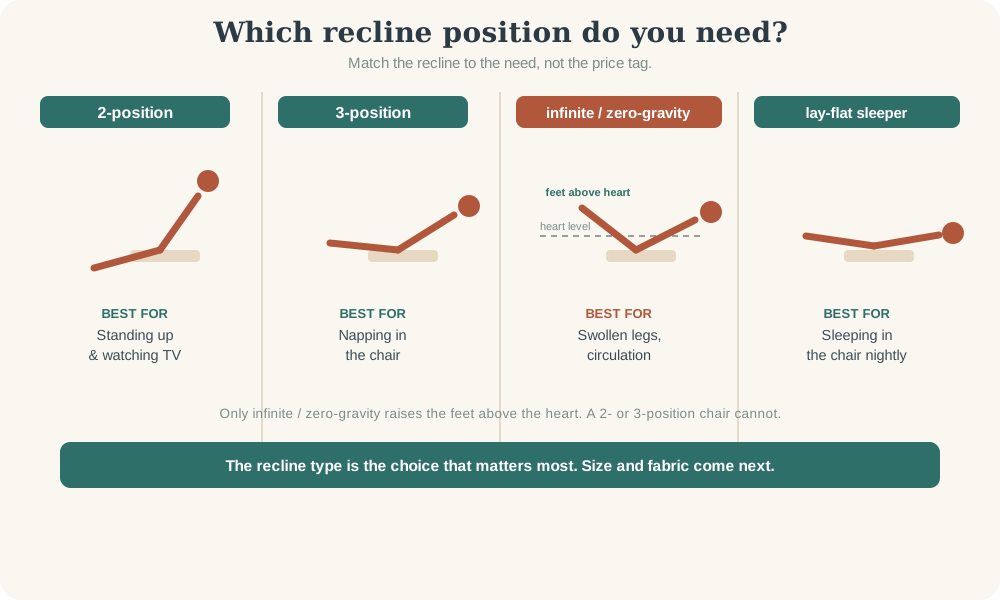
This is the choice that drives the price and almost everything else, and it comes down to how far the chair reclines and whether the footrest moves on its own.
- 2-position: Reclines only partway, to roughly a 45-degree angle, with the back and footrest moving together on a single motor. Good for sitting, reading, and watching TV. This is what most people actually need.
- 3-position: Reclines much further, to a near-flat "deep incline" comfortable for napping, still on a single motor so the back and footrest move together.
- Infinite-position: Uses two motors so the back and footrest move independently. That lets the chair lie nearly parallel to the floor and, crucially, lift the legs above the heart. An infinite position lift chair is the one to choose for circulation and swelling (more on that below).
- Lay-flat (sleeper): A type of infinite chair that reclines to roughly 180 degrees, flat enough to sleep in all night.
If your parent only needs help standing and likes to watch television, do not overspend on infinite positioning. If they have swollen legs or sleep in their chair, it is worth every dollar.
What is the best lift chair for swollen legs (edema)?
This is where the recline type stops being about comfort and starts being about health. To actually move fluid out of swollen legs, the feet have to rise above the level of the heart, so gravity can drain the built-up fluid from the lower legs. Health guidance on leg elevation is specific about that heart-level detail, and the Cleveland Clinic's own edema advice is to elevate your legs and feet to help the fluid drain. A standard 2-position or 3-position chair cannot do this, because the footrest never gets high enough. Only an infinite-position or zero-gravity chair, with its independent footrest, can raise the legs into a true heart-level position. So if your parent deals with edema, poor circulation, or swelling, the recline type is the whole reason to buy, and worth every dollar. Have their doctor confirm how they should position and how often, especially if there is any history of blood clots.
Are lift chairs good for sleeping?
Some are, and for many families this becomes the real reason for the purchase, when a parent can no longer sleep flat in a bed comfortably and ends up dozing in a recliner anyway. For occasional napping, a 3-position chair that reclines near-flat is enough. For sleeping in the chair every night, look specifically for a lay-flat or "sleeper" model that reclines to roughly 180 degrees with no painful gap between the seat and the footrest. A lift chair for sleeping should lie genuinely flat and support the whole body, so check the recline angle and try it if you can before committing. If the real problem is that your parent can no longer sleep flat in a bed, an adjustable bed that raises the head and legs is often the better long-term fix.
What size lift chair do I need?
A lift chair has to fit your parent the way a shoe fits a foot. Too big and their feet dangle, their back loses lumbar support, and the lift pushes them awkwardly. Too small and they are wedged against the armrests. The catch: there is no industry-standard sizing, so a "medium" from one brand is not a "medium" from another. Always use the specific manufacturer's height-and-weight chart.
As an example, Golden Technologies groups its chairs roughly like this:
| Size | Fits a user about |
|---|---|
| Small / Petite | Up to 5 feet 5 inches |
| Medium | 5 feet 5 inches to 6 feet |
| Large | 5 feet 10 inches to 6 feet 2 inches |
| Tall | 6 feet 2 inches and up |
Other brands draw the lines differently, so treat this as a guide, not gospel. On weight, standard chairs are typically rated for 300 to 375 pounds, and a heavy duty lift chair (sometimes called bariatric) extends to roughly 400 to 600 pounds with a wider, deeper seat. Choose a capacity your parent sits comfortably within, not right at the limit, because exceeding the rating can void the warranty and strain the lift.
Single or dual motor: what's the difference?
It is simpler than it sounds, and it maps directly onto the recline types above. A single motor moves the back and footrest together, which is all a 2-position or 3-position chair needs. A dual motor runs the back and footrest on separate controls so they move independently, which is what unlocks infinite positioning and a true zero-gravity, feet-above-heart recline. If you want infinite or zero-gravity, you need dual motors. If you only want to sit, recline a bit, and stand, a single motor is fine and costs less.
What lift chair material is easiest to clean?
For any parent dealing with incontinence, spills, or simply a lot of daily use, the fabric matters more than the brochure photos suggest, and the honest answer surprises people: real leather is one of the harder materials to keep clean, while modern performance fabrics and polyurethane (faux-leather) clean up best. Manufacturers build these specifically for it. Pride notes that real leather cannot stand up to regular cleaning the way its synthetic materials can, and offers easy-clean options like Sta-Kleen, a polyurethane that is antimicrobial and stain-resistant. Golden's Brisa is a polyurethane that is easy to clean and disinfect and blocks liquid from seeping into the chair.
One distinction worth knowing, because it protects your parent's dignity and your investment: water-resistant is not the same as waterproof. Some fabrics are rated only for "light" incontinence and can eventually saturate after heavy or prolonged exposure. If incontinence is a real factor, ask the supplier specifically for a waterproof performance fabric, not just a water-resistant one. For the bigger picture on managing this with care, see our guide to adult incontinence products.
Do lift chairs work in a power outage?
Yes, enough to keep your parent safe, which is the part that matters. Most powered lift chairs include a battery backup, usually two 9-volt batteries in the control box. It is designed to do one important job: if the power goes out while your parent is reclined, the backup gives them about one full cycle, enough to bring the chair upright so they can get out of it. It is not meant for normal use during a long outage. Because a standard 9-volt is not rechargeable and provides only that single emergency cycle, keep fresh batteries on hand and replace them after any use, or about every six months. Some chairs offer a rechargeable lithium backup that is good for several uses, which is worth asking about if outages are common where your parent lives.
Do lift chairs come with heat and massage?
Many do, as a real factory option, typically several massage motors (usually vibration-based) and low and high heat settings. They can feel wonderful, but the sales pages leave out something that matters: heat and vibration are not safe for everyone. Before turning these on, check with your parent's doctor if any of the following apply:
- A pacemaker or heart condition.
- A history of blood clots (DVT) or circulation problems.
- Diabetes or neuropathy, where reduced heat sensation raises the risk of burns.
- Osteoporosis, fragile skin, or sensitive skin.
When heat is used, start on the lowest setting to avoid burns, and treat the massage as comfort, not therapy. These features are a nice extra for the right person, but they are not a reason on their own to buy a more expensive chair.
How much do lift chairs cost, and what does Medicare pay?
Prices vary widely with the recline type and the features, so treat these as broad ranges, not quotes. A simple 2-position chair generally starts around $700 and runs higher for a USA-made frame. An infinite-position or zero-gravity chair, with its dual motors and extra features, typically runs from about $1,500 to $2,500, and premium models with leather or massage climb past $2,500. Heavy-duty and full lay-flat sleeper models tend to sit at the upper end, though clean published prices for those are hard to pin down, so get a written quote.
On Medicare, the single most useful fact is this: Medicare Part B covers only the motorized lift mechanism inside the chair, not the chair itself. The frame, fabric, recline, heat, and massage are all yours to pay for. The reimbursement for the mechanism is modest and varies by state, and there are strict eligibility rules and a specific form your doctor must complete. We walk through exactly who qualifies, the form, and the real out-of-pocket math in our full guide: does Medicare cover lift chairs. If Medicare will not help, that guide also points to the Medicaid and VA paths.
The best lift chairs compared by brand
How the major brands compare. Positions and capacities are from each manufacturer's own materials; where a figure is not clearly published, we say so rather than guess. Confirm current specs with the manufacturer or a dealer.
| Brand | Best for | Recline types | Weight capacity | Notable feature |
|---|---|---|---|---|
| Pride (VivaLift!) | Feature-rich comfort | Infinite, zero-gravity, lay-flat | Around 400 lb | Heat, power headrest and lumbar, wireless phone charging on higher models |
| Golden (MaxiComfort) | Swollen legs (feet above heart) | Infinite, patented zero-gravity (Twilight Tilt) | 300 to 600 lb (wide models) | Feet-above-heart positioning; multi-zone recline |
| La-Z-Boy | Furniture styling that blends in | Power lift with zero-gravity recline | Up to about 350 lb | Familiar furniture styling; wall-hugging design; battery backup |
| Mega Motion | Quiet operation on a budget | 3-position and infinite (some zero-gravity) | About 325 to 500 lb | Quiet operation; pocketed-coil seating; USB on some models |
| UltraComfort | Heavy-duty capacity | Multi-zone infinite and zero-gravity | 400 to 600 lb (heavy-duty) | Articulating headrest and lumbar; far-infrared heat; air massage |
| Journey (Perfect Sleep Chair) | Sleeping in the chair nightly | Near-infinite with a full lay-flat sleep position | About 375 lb | Designed specifically for sleeping in the chair; zoned heat and massage |
One honest warning that applies to every brand here: read the warranty past the headline. A "lifetime warranty" almost always covers only the steel lift mechanism and frame. The motors and electronics, the parts most likely to fail, typically drop to two or three years (often prorated after that), and labor is frequently just one to two years or excluded entirely. The lifetime claim is real, but it is not covering the parts you would worry about.
How to choose the best lift chairs for your needs
Pull it together, and the right chair usually picks itself:
- Just needs help standing, watches TV: a 2-position chair. Do not overspend.
- Naps in the chair: a 3-position chair that reclines near-flat.
- Swollen legs, edema, or poor circulation: an infinite-position or zero-gravity chair (feet above heart), confirmed with the doctor.
- Sleeps in the chair every night: a lay-flat sleeper model.
- Larger or taller parent: a heavy-duty model, sized to their height and weight, not at the limit.
- Incontinence or frequent spills: a waterproof performance fabric, not real leather or plain cloth.
- Frequent power outages: confirm the battery backup, and consider a rechargeable lithium option.
- Qualifies medically and money is tight: have the doctor complete Form CMS-849 to claim the lift mechanism through Medicare, and check Medicaid or the VA.
Frequently Asked Questions
What is the best lift chair? There is no single best lift chair. For most people who just need help standing, a 2-position chair is the best value. For swollen legs or circulation, choose an infinite-position (zero-gravity) chair. For sleeping in the chair, a lay-flat model. For a larger parent, a heavy-duty chair sized to their height and weight.
How much do lift chairs cost in 2026? A 2-position chair generally starts around $700, an infinite-position or zero-gravity chair runs roughly $1,500 to $2,500, and premium leather or massage models cost more. Prices vary widely by features and retailer, so get a written quote.
Does Medicare pay for a lift chair? Medicare Part B covers only the motorized lift mechanism, not the chair, fabric, or recline and massage features, and only for people who meet strict eligibility rules with Form CMS-849. See our full guide to whether Medicare covers lift chairs for the details.
What is the best lift chair for swollen legs? An infinite-position or zero-gravity chair, because it is the only type that raises the feet above the heart, which is what helps drain fluid from swollen legs. A standard 2-position or 3-position chair cannot lift the legs high enough.
Are lift chairs good for sleeping in? For occasional naps, a near-flat 3-position chair works. For sleeping in the chair every night, choose a lay-flat (sleeper) model that reclines to roughly 180 degrees with full body support.
What size lift chair do I need? Use the specific manufacturer's height-and-weight chart, since there is no industry standard. Pick a chair your parent's height falls within and a weight capacity they sit comfortably below, not at the limit. A chair that is too big or too small is both uncomfortable and less safe.
Do lift chairs work in a power outage? Yes. Most have a battery backup, usually two 9-volt batteries, that provides about one full cycle to bring the chair upright so your parent can get out during an outage. Keep fresh batteries on hand, since a standard 9-volt is not rechargeable.
A last word
A lift chair earns its place when it fits the person, not just the room: the right recline for their health, the right size for their body, a fabric that survives real life, and a lift that lets them stand on their own terms. Match those, read the warranty past the word "lifetime," and check whether Medicare will cover the mechanism. Get that right, and a chair becomes one of the simplest ways to help a parent keep their footing, and their dignity, in their own living room.
If you want to tell someone how it is going, you are welcome to write to us.
How we evaluated the best lift chairs
Every number here traces to something published: manufacturer specifications, fabric and sizing guides, Medicare coverage rules from CMS, and clinical guidance on leg elevation. Where a brand does not clearly publish a figure we say so instead of estimating one, and we explain what a "lifetime" warranty covers, which is narrower than the word suggests. Firm numbers are distinguished from ranges throughout. Confirm current details with the provider before you buy. See how ElderHearth works for our full method.
Sources
- Pride Mobility, lift recliner position guide and how to select power lift recliner fabric (checked June 2026).
- Golden Technologies, zero-gravity lift recliner collections, recommended sizing guidelines, and fabrics (checked June 2026).
- UltraComfort, lift chair sizing (checked June 2026).
- Cleveland Clinic, leg elevation and edema (elevate your legs and feet to help fluid drain).
- Healthline, elevating legs (position your legs above the level of your heart to reduce swelling).
- CMS, National Coverage Determination 280.4 and Form CMS-849 (seat-lift mechanism coverage).
- ElderHearth, does Medicare cover lift chairs.