
Best Walk-in Tubs of 2026: An Honest Comparison for Aging in Place
An honest 2026 guide to the best walk-in tubs: inward vs outward doors, soaker vs jets, wheelchair-accessible models, the hot-water facts, and who pays.
The brands compared at a glance
1
Kohler Walk-In BathThe widest range of options from one maker
- Ultra-low step-in threshold (around 3 inches)
- Heated surfaces and a fast drain on higher models
- Soaker, air, water, combo, bariatric, and wheelchair options
- Lifetime limited warranty (read what it actually covers)
2
American Standard Walk-In TubsA fast drain and an established installer network
- Drains in about two minutes on fast-drain models
- Outward-swinging door options for easier entry
- Air and water jets with ozone cleaning
- Component warranties of 5 to 15 years, lifetime door seal
3
Safe Step Walk-In TubsComfort features and dual hydrotherapy
- Dual air and water hydrotherapy
- Heated seat and backrest, plus a handheld shower
- No-strength locking door handle
- Lifetime limited warranty
4
Ella's Bubbles Walk-In TubsWheelchair-accessible and bariatric transfer models
- Strong range of wheelchair-accessible transfer tubs
- Bariatric models with wider doors and seats
- Air, water, and combination hydrotherapy
- Confirm current warranty terms with the maker
5
Jacuzzi Walk-In TubsWhirlpool-jet hydrotherapy for sore joints
- Long heritage in whirlpool jet systems
- Hydrotherapy-focused designs
- Confirm current specs and warranty with the maker
ElderHearth offers general information, not medical or financial advice. Warm-water hydrotherapy carries real cautions for some health conditions, covered below; ask your parent's doctor first. Prices vary widely, so confirm current pricing and specs with the manufacturer.
The bathroom is where most falls at home happen, so a safer way to bathe is one of the highest-value changes you can make for an aging parent. But a walk-in tub is a big, permanent purchase, and the difference between the right model and the wrong one is whether your parent will actually use it. This is an honest comparison of the best walk-in tubs in 2026: inward versus outward doors, which hydrotherapy actually helps, wheelchair-accessible options, the hot-water and drain facts the showroom skips, and how to know if a tub is even the right call.
The short answer: which walk-in tub is best?
There is no single best walk-in tub, only the best one for a specific body, bathroom, and need. The quick version:
- Best if the goal is just preventing falls: often a curbless shower, not a tub at all. Price the simpler option first.
- Best for a less mobile or larger parent: an outward-swinging door, which is easier to get in and out of.
- Best for joint and muscle pain: a water-jet (hydrotherapy) tub. For gentle circulation, an air-jet tub.
- Best for a wheelchair user: a wheelchair-accessible model with an extra-wide outward door and transfer seat.
- Best for cold-sensitive bathers: a model with a fast drain and a heated seat and backrest.
The rest of this guide shows how to land on the right one with confidence.
What is a walk-in tub, and who needs one?
A walk-in tub is a bathtub with a watertight door in the side, so your parent steps over a low threshold (often around three inches) instead of climbing over a high tub wall, then sits on a built-in seat to bathe. It suits someone who finds a standard tub unsafe or impossible to get into, but who still wants to soak rather than shower. The key tradeoff to understand from the start: because you enter and exit through a door, you sit in the tub while it fills and again while it drains, which shapes several of the choices below.
Walk-in tub vs walk-in shower: which is right?
Before you spend thousands, answer this honestly, because the showroom won't raise it. If the main goal is simply preventing falls, a curbless (zero-threshold) walk-in shower is often safer and cheaper than any tub. There is no tub wall to cross at all, no door to seal, and no sitting through a fill-and-drain cycle. For many older adults, especially those who shower rather than bathe, that is the better answer.
A walk-in tub earns its place in a narrower case: when your parent genuinely wants to soak for comfort or joint relief, will actually use it, and plans to stay in the home long-term. If that is your situation, read on. If not, price a curbless shower and grab bars first. The honest walk-in tub vs walk-in shower answer is that the tub is the right tool less often than the ads suggest. For the full cost and worth-it breakdown, see our guide on whether a walk-in tub is worth it and who pays.
Inward or outward swing door: which do you need?
This single choice affects safety, accessibility, and price more than any feature.
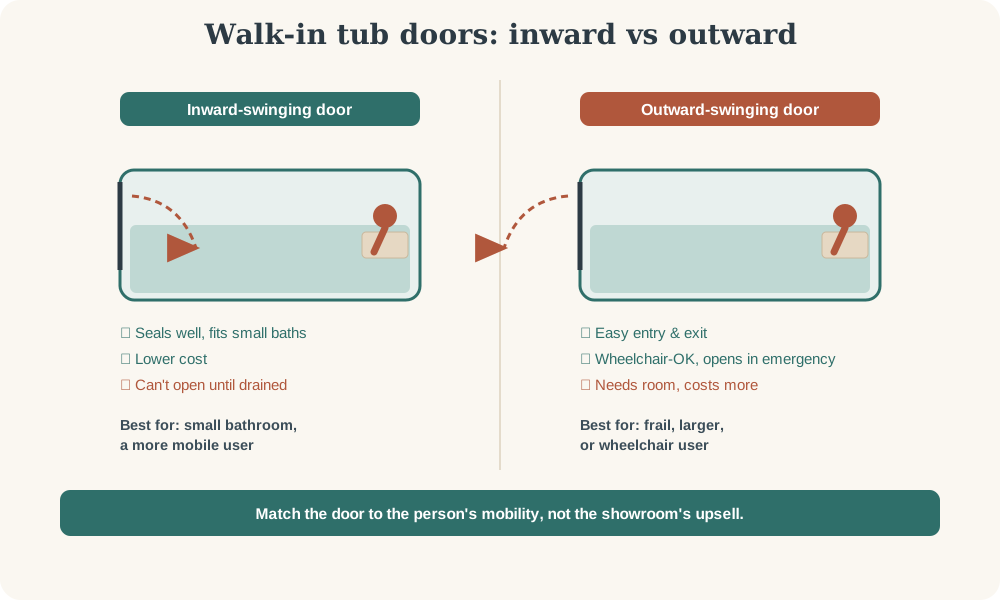
- Inward-swinging door: The door opens into the tub, and water pressure helps hold it sealed, so leak protection is good and it fits smaller bathrooms. The catches: the door cannot be opened until the tub drains, which matters in an emergency, and the inward swing eats space and makes entry harder for a larger or less mobile person.
- Outward-swinging door: The door opens out into the room, which makes getting in and out much easier, allows wheelchair-accessible designs, and can be opened in an emergency without fully draining. An outward swing walk-in tub door needs clearance in the bathroom, usually costs more, and relies on a sturdy latch and seal.
For a frail, larger, or wheelchair-using parent, the easier entry of an outward door is usually worth the extra cost and space. For a smaller bathroom and a more mobile user, an inward door is simpler and cheaper.
Soaker, air jets, or water jets: which walk-in tub do you need?
Walk-in tubs come in a few hydrotherapy levels, and more is not automatically better. Match it to what your parent actually wants.
- Soaker: No jets, just the safety features (seat, grab bars, low threshold, anti-slip floor). The simplest and most affordable, and all many people need.
- Air jets: Release warm air bubbles for a gentle, all-over, lazy-river sensation. Easier to keep clean, since the jets dry themselves, and pleasant for relaxation and gentle circulation.
- Water (whirlpool) jets: Push water out under pressure for a stronger, targeted massage aimed at sore muscles and joints. More powerful, but because they circulate bath water, they need more diligent cleaning.
- Combination and extras: Some tubs offer both jet types, plus a heated seat and backrest, chromotherapy lighting, or aromatherapy. A heated seat and backrest is the upgrade most worth its price, because it keeps your parent warm during the fill and drain.
If your parent wants relief for arthritis or sore muscles, choose water jets. If they want gentle relaxation, air jets. If they just want a safe soak, a soaker is plenty.
Do walk-in tubs help with arthritis and circulation?
For the right person, warm-water bathing can genuinely help, which is why a best walk-in tub for arthritis usually means one with water jets. A 2025 randomized controlled trial in BMC Complementary Medicine and Therapies found that warm-water baths eased pain, fatigue, and sleep quality for people with rheumatoid arthritis, and the buoyancy of sitting in water takes pressure off aching joints. A water-jet tub adds targeted massage to that warmth.
But this is firmly a talk-to-the-doctor area, because warm-water immersion is not safe for everyone, and the brochures never say so:
- Diabetes or neuropathy: Reduced sensation means your parent may not feel water that is too hot, raising the risk of serious burns. Keep the water at or below 105°F (about 40.5°C), check it with a thermometer, and insist on an anti-scald valve.
- Heart disease or heart failure: Heat raises the heart rate, so check with their cardiologist before using hot water or jets.
- Low blood pressure or dizziness: Warm water can lower blood pressure further and increase the risk of feeling faint while getting up.
Used at a safe temperature, with a doctor's okay, a warm soak can be a real comfort. Treat the health claims on a sales page as marketing, not medicine.
How long do walk-in tubs take to fill and drain?
Long enough that it is the most common regret, so plan for it. Because your parent sits in the tub the whole time, a standard fill-and-drain cycle of several minutes can mean sitting wet and cold. A fast drain (some brands drain in around two minutes or less) and a heated seat and backrest make the wait far more bearable. We cover this and the other real-world drawbacks in detail in our walk-in tub worth-it guide.
Will a walk-in tub run out of hot water?
It can, so check this before you buy. A walk-in tub holds far more water than a standard tub (often 50 or more gallons), so an undersized household water heater can run out of hot water before the tub is full. Many homes need a larger or supplemental water heater, sometimes an in-line heater that keeps the water warm. Ask the installer to confirm your parent's heater is up to the job.
What size walk-in tub do I need?
Most walk-in tubs are built to replace a standard tub in a 60-inch alcove without moving walls, which keeps installation simpler. Two situations call for a specific model:
- A wheelchair user: A wheelchair accessible walk-in tub uses an extra-wide outward-swinging door and a transfer seat so your parent can move from a wheelchair into the tub. These are wider, so confirm the bathroom can fit one (some use an extension panel to fill a 60-inch space).
- A larger parent: A bariatric model has a wider door and seat and a higher weight capacity. Match the seat width and capacity to your parent, not just the tub length.
Also check the step-in threshold height (lower is safer, with some as low as three inches) and the seat height and width, since those determine how easily your parent gets in, sits, and stands.
How much do walk-in tubs cost, and does Medicare pay?
Plan for a wide range, because features and installation drive the price. A walk-in tub typically runs $3,500 to $20,000 installed, with high-end jetted, heated, fast-drain models reaching higher. On coverage, the short version: Original Medicare does not cover walk-in tubs, because it treats them as a home modification, not durable medical equipment. Medicaid waivers, VA grants, and some Medicare Advantage plans may help instead. We walk through the full cost breakdown, the coverage rules, and the real drawbacks in our does Medicare cover walk-in tubs guide. If a national installer reaches out after you request a quote, our West Shore Home review covers its real cost range, financing terms, and your cancellation rights before you sign anything.
The best walk-in tubs compared by brand
How the major brands line up. Features and warranty terms are from each manufacturer's own materials and reputable senior-care reviews; where a figure is not clearly published, we say so. Confirm current specs and pricing with the manufacturer.
| Brand | Best for | Hydrotherapy | Notable feature | Warranty |
|---|---|---|---|---|
| Kohler | The widest range from one maker | Soaker, air, water, combo, bariatric, wheelchair | Ultra-low 3-inch threshold; heated surfaces; fast drain | Lifetime limited |
| American Standard | A fast drain and an established installer | Air and water jets | Outward-door options; drains in about two minutes; ozone cleaning | Components 5 to 15 years; lifetime door seal |
| Safe Step | Comfort features and dual hydrotherapy | Dual (air and water) hydrotherapy | Heated seat and backrest, handheld shower, no-strength locking handle | Lifetime limited |
| Ella's Bubbles | Wheelchair-accessible and bariatric transfer | Air, water, and combo | Strong range of wheelchair-accessible and bariatric transfer models | Confirm with the manufacturer |
| Jacuzzi | Whirlpool-jet hydrotherapy | Whirlpool-jet hydrotherapy heritage | Long heritage in jet systems | Confirm with the manufacturer |
One honest note: a "lifetime" warranty usually covers specific parts (often the tub shell and the door seal) rather than every component, and labor and in-home service are frequently limited or separate. The door seal is the part most likely to fail over time, so read exactly what the lifetime claim covers, and get the labor terms in writing.
How to choose the best walk-in tubs for your needs
Pull it together, and the right choice usually becomes clear:
- Goal is just fall safety: price a curbless walk-in shower and grab bars first.
- Wants to soak and will use it long-term: a walk-in tub is worth considering.
- Frail, larger, or hard to move: an outward-swinging door for easier entry.
- Wheelchair user: a wheelchair-accessible transfer model.
- Arthritis or sore muscles: water (whirlpool) jets, used at a safe temperature.
- Wants gentle relaxation: air jets, which are also easier to keep clean.
- Gets cold easily: insist on a fast drain plus a heated seat and backrest.
- Diabetes, neuropathy, or heart disease: talk to the doctor first, and add an anti-scald valve.
Frequently Asked Questions
What is the best walk-in tub? There is no single best walk-in tub. For joint pain, a water-jet model. For a wheelchair user, a wheelchair-accessible transfer tub. For a larger or frail parent, an outward-swinging door. And if the goal is only fall safety, a curbless shower may beat any tub. The right pick depends on your parent's body, bathroom, and needs.
Is a walk-in tub better than a walk-in shower? Not always. For simple fall prevention, a curbless (zero-threshold) walk-in shower is often safer and cheaper, with no tub wall to cross and no fill-and-drain wait. A walk-in tub is the better choice mainly when your parent wants to soak for comfort or joint relief and will use it long-term.
Should I get an inward or outward swinging door? An outward-swinging door is easier to enter and exit, allows wheelchair access, and can open in an emergency without draining, but it needs more bathroom space and costs more. An inward door is more compact and seals well, but is harder to use for a larger or less mobile person.
What is the best walk-in tub for arthritis? A water-jet (hydrotherapy) tub, because the warm water and targeted massage can ease joint pain, used at a safe temperature of 105°F or below. Confirm with the doctor first if your parent has diabetes, neuropathy, or heart disease.
Will a walk-in tub run out of hot water? It can. Walk-in tubs hold 50 or more gallons, so an undersized water heater may not fill the tub with hot water. Many homes need a larger or supplemental in-line heater, so confirm with the installer.
Does Medicare pay for a walk-in tub? No. Original Medicare treats walk-in tubs as a home modification, not durable medical equipment, so it does not cover them. Medicaid waivers, VA grants, and some Medicare Advantage plans may help. See our full coverage guide for the details.
How much does a walk-in tub cost in 2026? Typically $3,500 to $20,000 installed, with high-end jetted and heated models costing more. Price depends heavily on features and the installation, so get a written quote.
A last word
A walk-in tub is worth it only when it fits the person and the goal: the right door for their mobility, the right jets for their body, a fast drain and heated seat so the wait does not chill them, and a fair warranty on the seal that matters most. Just as important, make sure a tub is the right tool at all before you commit, because for many parents a curbless shower is the safer, simpler answer. Get that decision right, and the reward is the same one every change in this guide aims at: a parent bathing safely, and with dignity, in the home they love.
If you want to tell someone how it is going, you are welcome to write to us.
How we evaluated the best walk-in tubs
Manufacturer specifications, senior-care reviews, and clinical guidance on warm-water hydrotherapy are the sources behind this page. The clinical guidance is why we carry health cautions the sales pages leave out. Where a brand does not clearly publish a figure, or where a "lifetime" warranty stops short of covering everything, we say so rather than repeat the brochure. Confirm current details with the provider before you buy. See how ElderHearth works for our full method.
Sources
- Kohler, types of walk-in tubs and air tub vs whirlpool (checked June 2026).
- American Standard, outward-swinging door; Livinator, inward vs outward doors.
- SeniorLiving.org, Safe Step vs American Standard; NCOA, best walk-in tubs.
- Ella's Bubbles, wheelchair-accessible transfer tubs.
- Warm-water hydrotherapy and rheumatoid arthritis, warm saltwater and warm water baths, a randomized controlled study, BMC Complementary Medicine and Therapies, 2025; diabetes and hot water safety, Healthline.
- ElderHearth, does Medicare cover walk-in tubs.