
Bone Health in Older Adults: Preventing Osteoporosis and Fractures (2026)
Bone health in older adults is the quiet key to staying independent. How osteoporosis works, the calcium and vitamin D targets, and the fall link.
ElderHearth offers general information, not medical advice. Ask your parent's doctor about bone-density testing and what's right for them.
Most families don't think about bones until one breaks, and by then a lot is already at stake. Bone health in older adults is quietly one of the most important things you can protect, because for an older person, a single fracture can be the event that ends independence. The good news: bone loss is partly preventable and manageable, with steps that are mostly food, movement, and fall-proofing.
Why bone health matters so much
Bone is living tissue, and with age it can lose density faster than the body rebuilds it. Osteoporosis is the result: bones become porous and fragile, and they break far more easily, sometimes from a minor fall or even a bump. The reason this is so serious in older adults is what comes after a fracture, especially a hip fracture: pain, lost mobility, a hospital stay, and a measurable rise in mortality. Protecting bone is really about protecting independence.
Osteoporosis: the "silent" disease
Osteoporosis usually has no symptoms until a bone breaks, which is why it's called silent. You can't feel your bones thinning. That's the case for not waiting: ask your parent's doctor whether a bone-density (DEXA) scan is due, particularly for women after menopause and anyone with a family history or a previous low-impact fracture.
How much calcium and vitamin D for seniors: the daily targets
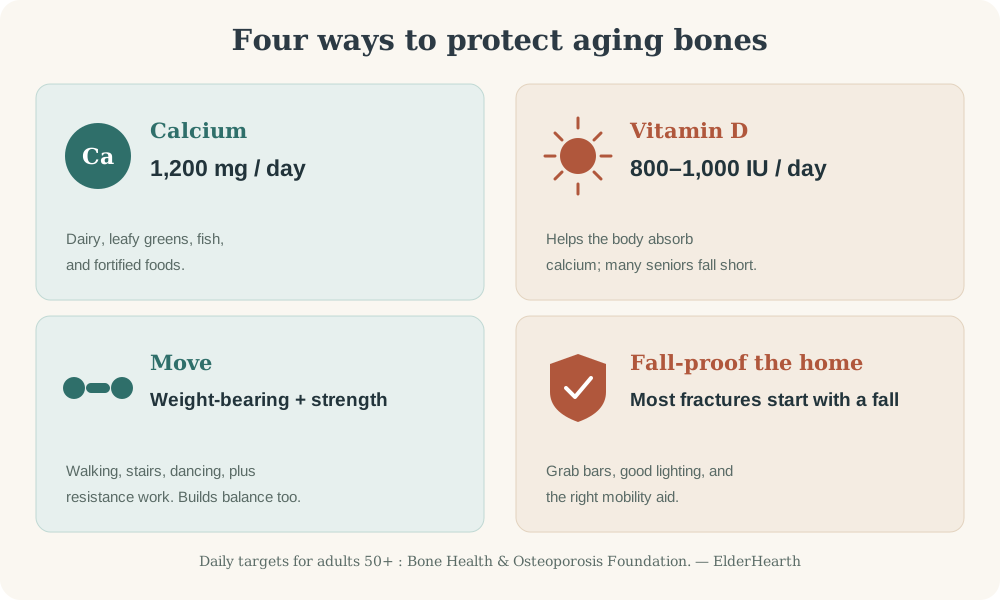
These two are the foundation. For adults 50 and older, the Bone Health and Osteoporosis Foundation recommends:
| Nutrient | Daily target (50+) |
|---|---|
| Calcium | 1,200 mg |
| Vitamin D | 800 to 1,000 IU |
Good calcium sources include low-fat dairy, leafy greens, fish, and fortified juices, milk, and grains. Vitamin D helps the body absorb calcium, and many older adults fall short of it, so it's worth asking the doctor whether a supplement makes sense. If calcium is the one being added, our guide to choosing between calcium citrate and carbonate covers what decides the form for an older parent.
Exercise that builds bone
Bone responds to being used. Two kinds of exercise help most:
- Weight-bearing exercise, where you're on your feet working against gravity: walking, hiking, stair climbing, dancing, and tennis.
- Muscle-strengthening (resistance) exercise, which pulls on bone and builds it, along with the muscle that prevents falls.
Even modest, regular activity helps, and it improves balance, which protects bones twice over.
Two conditions deserve their own guides: osteoporosis, the silent bone-thinning disease behind most fractures, and arthritis in older adults, the joint pain that makes staying active harder. Both are common, and both are manageable.
The fall-and-fracture connection
Bone health connects to everything else on this site through falls. Strong bones matter most when a fall happens, and preventing the fall is half the battle. Fragile bones plus a fall is how most serious fractures happen, so bone care and home safety for seniors work together: nutrition and exercise on one side, grab bars, lighting, and the right mobility aid on the other.
What hurts bone (and is worth changing)
- Smoking weakens bone.
- Too much alcohol harms it.
- A diet short on calcium and vitamin D, and a sedentary routine.
Frequently Asked Questions
How much calcium and vitamin D do older adults need? For adults 50 and older, about 1,200 mg of calcium and 800 to 1,000 IU of vitamin D per day, ideally from food first, with supplements if a doctor advises.
What are the best exercises for bone strength in the elderly? Weight-bearing activity like walking, stair climbing, and dancing, plus muscle-strengthening (resistance) exercise. Both build bone and improve balance.
Does osteoporosis have symptoms? Usually not until a bone breaks, which is why it's called the silent disease and why a bone-density scan matters.
Can osteoporosis be treated in older adults? Yes. Beyond nutrition and exercise, doctors can prescribe medications that slow bone loss or help rebuild bone. Ask about testing and options.
A last word
Bone health in older adults isn't dramatic, which is exactly why it gets overlooked, right up until a fracture changes everything. Get the calcium and vitamin D, keep your parent moving, ask about a bone-density scan, and fall-proof the home so strong bones are never tested unnecessarily. It's one of the highest-return, lowest-drama things you can do to keep a parent aging safely at home.
If you would like someone to listen, you are welcome to write to us.
Sources
- National Institute on Aging, Osteoporosis.
- Bone Health and Osteoporosis Foundation, patient resources and FAQ.