
Arthritis in Older Adults: What They Can and Can't Do
Arthritis in older adults: the exercise that helps, foods to avoid, and the safest pain relief when NSAIDs are risky for an aging body.

ElderHearth offers general information, not medical advice. New, persistent, or worsening joint pain should be evaluated by a doctor, and pain medication choices in later life should be made with them.
Sore, stiff joints get waved off as "just getting old," but arthritis in older adults is a real, treatable condition, and how you manage it day to day makes a large difference. About one in five U.S. adults has some form of arthritis, and it grows more common with age. This guide covers what a parent with arthritis can and can't do, from the exercise that helps to the foods worth cutting, plus the part that trips up most families: the most effective painkiller is also the riskiest one for an aging body, so relief takes a little more thought in later life.
The short version: an older adult with arthritis should keep moving (gentle, low-impact activity is the single most effective step), lose excess weight if there is any, and eat an anti-inflammatory diet. For pain, the effective NSAID drugs like ibuprofen carry real risks in older age, so the safest relief often means a topical NSAID or careful, doctor-guided choices rather than reaching for oral ibuprofen.
The two main types: osteoarthritis vs rheumatoid arthritis
Most arthritis in later life is one of two kinds, and telling them apart matters because the treatment differs:
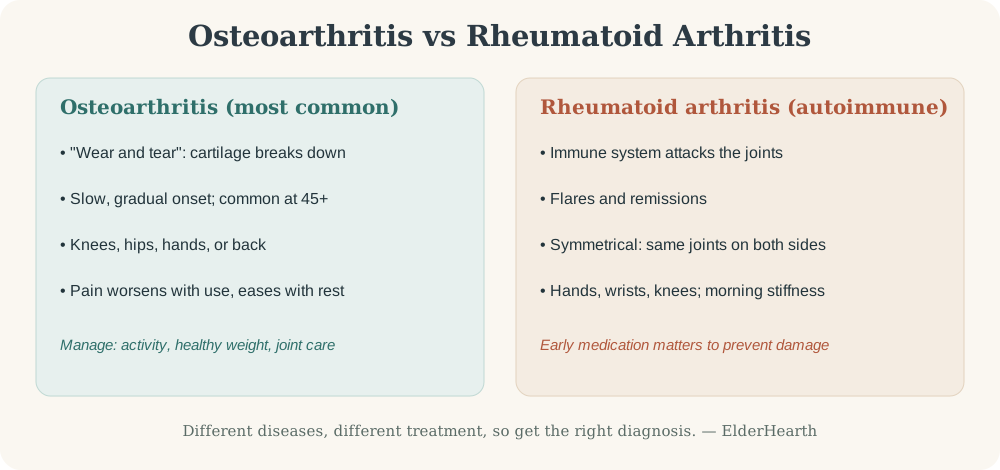
Osteoarthritis (OA) is the common "wear and tear" type, where the cartilage cushioning the joints gradually breaks down. It comes on slowly, usually as pain and stiffness in the knees, hips, hands, or back, and tends to worsen with use and ease with rest.
Rheumatoid arthritis (RA) is an autoimmune disease, where the immune system attacks the joints. It tends to be symmetrical (the same joints on both sides), affects multiple joints with flares and remissions, and often brings marked morning stiffness. Because RA can permanently damage joints, early diagnosis and treatment matter a great deal.
What exercise can an older adult with arthritis do?
This is the one that feels backwards: when joints hurt, resting them seems right, but movement is actually the most effective treatment there is. Major guidelines put exercise first, ahead of any medication. It reduces pain and stiffness, strengthens the muscles that support the joint, and keeps a parent steady on their feet.
The key is the right kind, low-impact:
- Walking, at a comfortable pace.
- Swimming or water aerobics, which take the weight off sore joints entirely.
- Cycling, including a stationary bike.
- Tai chi, which is gentle, improves balance, and is well studied for arthritis.
- Gentle strengthening and stretching to support and free up the joints.
What to avoid is high-impact pounding (running on hard surfaces, jumping) and pushing hard through a flare. During a bad flare, ease off to gentle range-of-motion movement rather than stopping entirely, and build back up as it settles. Some soreness during and after activity is normal; sharp or lasting pain is a sign to scale back and check with the doctor.
What foods help, and what should they avoid?
Diet will not cure arthritis, but it helps in two real ways: reducing inflammation, and taking load off the joints through weight. That second one is powerful. For an overweight parent with knee arthritis, losing around 10 percent of body weight meaningfully reduces the load on the knees, lowers inflammation, and can slow the disease.
| Can enjoy (anti-inflammatory) | Best to limit |
|---|---|
| Oily fish (salmon, sardines, mackerel), omega-3s | Highly processed and fried foods |
| Olive oil, nuts, seeds | Sugary foods and drinks |
| Fruits and vegetables, especially vitamin C rich | Saturated fat and full-fat dairy |
| Beans, lentils, whole grains for fiber | Refined carbohydrates like white bread |
| Colorful berries, leafy greens | Excess red and high-heat grilled meat |
The pattern is the familiar heart-healthy one, which is convenient, because arthritis so often keeps company with the other conditions of later life. The same plate helps high blood pressure, high cholesterol, and diabetes at the same time.
What is the safest pain relief for an older adult with arthritis?
There is a twist that defines arthritis care in later life. The drugs that work best for joint pain, oral NSAIDs like ibuprofen (Advil) and naproxen (Aleve), are also the ones that carry the most risk for an older body. In older adults they raise the chance of stomach bleeding, kidney trouble, higher blood pressure, and heart problems, and those risks climb for a parent who already has heart, kidney, or blood pressure conditions. For a frail parent or one with heart disease, guidelines advise against oral NSAIDs.
That does not leave a parent to suffer. The safer path in older age usually looks like this, always confirmed with their doctor:
- Movement and weight first. These are the most effective steps and carry no drug risk.
- Topical NSAIDs (a gel or cream rubbed on the joint) deliver similar relief to the pills with far less reaching the bloodstream, which makes them a much safer choice for many older adults, especially for knee and hand arthritis.
- Acetaminophen (Tylenol) helps some people, though less than NSAIDs, and can be a reasonable option when NSAIDs are off the table, as long as the daily dose stays within the limit the doctor sets.
- Heat and cold, physical therapy, and joint injections are other tools a doctor may add.
The one thing not to do is quietly take oral ibuprofen day after day, especially alongside heart or blood pressure medication. If your parent is reaching for it regularly, that is the moment to ask their doctor for a safer plan. This is the same caution that applies to heart disease in older adults.
How can I help a parent with arthritis?
- Encourage the daily movement, and make it something gentle you can do together.
- Protect the joints at home. Jar openers, easy-grip tools, raised seats, and grab bars reduce the strain that sets off pain. Small home changes go a long way, and choosing between the many openers on the shelf comes down to one question, which we work through in gifts for someone with arthritis in hands, with the five kinds compared in the best jar openers for arthritis.
- Watch the pain medications. Know whether your parent is using oral NSAIDs, especially with heart, kidney, or blood pressure conditions, and raise it with the doctor or pharmacist. Keep an accurate medication list.
- Help with weight and cooking, since the anti-inflammatory, joint-sparing diet is mostly won in the kitchen.
- Mind the fall risk. Pain and stiffness make a parent less steady, so pair this with fall prevention, and, if bones are a concern, bone health and osteoporosis.
When to see a doctor
See a doctor for new, persistent, or worsening joint pain, swelling, or stiffness, especially if it is in multiple joints, symmetrical, or comes with morning stiffness, which can point to rheumatoid arthritis. Early RA treatment prevents joint damage, so do not wait it out. A primary care provider may refer your parent to a rheumatologist, a specialist in arthritis.
What an older adult with arthritis can and can't do
| Can do | Should avoid |
|---|---|
| Stay active with walking, swimming, cycling, tai chi | High-impact pounding or pushing through a flare |
| Use a topical NSAID gel, if the doctor agrees | Daily oral ibuprofen, especially with heart or kidney disease |
| Eat an anti-inflammatory, joint-sparing diet | Processed food, sugar, and excess weight |
| Lose excess weight to unload the joints | Resting the joints completely for long periods |
| Use heat, cold, and assistive tools | Ignoring symmetrical joint pain that may be RA |
Which brace does what for an arthritic knee, back, ankle or thumb, how long to wear one, and the point at which a support is standing in for an appointment, is the subject of our guide to braces and supports for elderly parents.
Building strength back around those joints is the other half: bands for the arms and legs, grip tools for the hands, and how to pace a first month of it are in our guide to home exercise equipment for seniors.
Arthritic feet have their own aisle: insoles, heel cups, bunion pads and what each one can and cannot do are in our guide to foot care products for elderly parents.
Frequently Asked Questions
What is the best exercise for arthritis in seniors? Low-impact activity such as walking, swimming or water aerobics, cycling, and tai chi, plus gentle strengthening and stretching. Movement is the single most effective treatment for arthritis, reducing pain and stiffness rather than worsening it. Ease off during a bad flare, but do not stop moving entirely.
Is Tylenol or ibuprofen better for arthritis in older adults? Ibuprofen (an NSAID) usually relieves arthritis pain better than Tylenol (acetaminophen), but oral NSAIDs are riskier for older adults, especially those with heart, kidney, or blood pressure conditions. Because of that, a topical NSAID gel is often the safer effective choice in later life, with acetaminophen as an option when NSAIDs cannot be used. Decide with the doctor.
What foods should you avoid with arthritis? Highly processed and fried foods, sugary foods and drinks, saturated fat, refined carbohydrates, and excess high-heat grilled meat can promote inflammation. Favor oily fish, olive oil, nuts, and plenty of fruits and vegetables, and, if overweight, losing weight to reduce the load on the joints.
What's the difference between osteoarthritis and rheumatoid arthritis? Osteoarthritis is wear-and-tear cartilage breakdown, usually gradual and in specific joints. Rheumatoid arthritis is autoimmune, tends to be symmetrical with flares and remissions, and needs early medical treatment to prevent joint damage.
Can arthritis be cured? There is no cure, but both types are very manageable. Osteoarthritis is controlled with movement, weight, joint care, and careful pain relief; rheumatoid arthritis with medication that calms the immune attack, ideally started early.
A last word
Arthritis in older adults is not something to simply endure. Keep your parent gently moving, help with weight and an anti-inflammatory diet, and get pain relief right for an aging body, which usually means favoring topical NSAIDs and movement over a daily oral ibuprofen habit. Get rheumatoid arthritis treated early. The payoff is real: less pain, more mobility, and a better chance of staying steady and independent at home.
Sources
- National Institute on Aging, Osteoarthritis.
- CDC, Arthritis Basics.
- American College of Rheumatology / Arthritis Foundation, 2019 Guideline for the Management of Osteoarthritis of the Hand, Hip, and Knee (exercise first-line; NSAID cautions in older adults).
- Arthritis Foundation, Comparing Pain Meds for Osteoarthritis.
- University of Maryland Medical System, Osteoarthritis: Foods to Eat and Avoid; IDEA trial on weight loss and knee osteoarthritis.