
How to Safely Lift an Elderly Person Without Hurting Your Back
How to safely lift an elderly person: body mechanics that protect your back, using a gait belt, safe transfers, and when a mechanical lift is safer.
ElderHearth offers general information, not medical or physical therapy advice. If your parent cannot bear weight, or you have a back problem, ask their doctor for a referral to a physical or occupational therapist who can teach safe transfers in your home. Never lift beyond what you can safely handle.
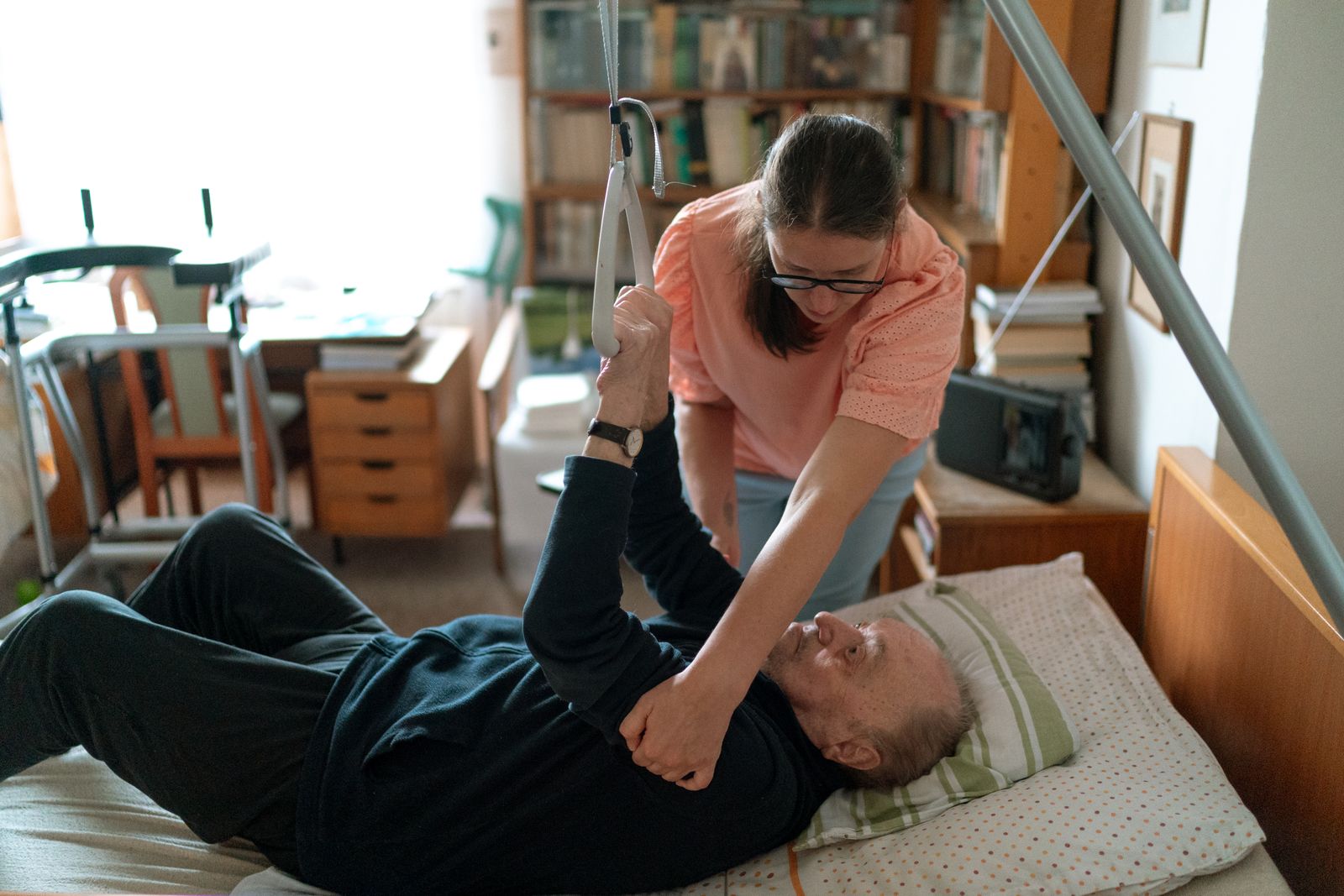
Helping a parent stand, move, and transfer is one of the most physical parts of caregiving, and one of the most dangerous, for both of you. Done wrong, it lands the parent on the floor and the caregiver in a back brace. Knowing how to safely lift an elderly person is really about protecting two people at once: your parent from a fall, and yourself from the injury that ends a lot of caregiving careers. This guide covers how to do it with technique and the right tools, and just as important, how to know when you should not be lifting at all.
Why caregiver back injuries are so common, and so preventable
Back injuries are the leading cause of injury among family caregivers, and most of them happen not in some dramatic emergency but during ordinary, daily transfers: bed to chair, chair to toilet, helping someone up off a couch. Most of them are preventable, though. They come from a few repeated mistakes, bending at the waist, twisting while holding weight, lifting with the back instead of the legs, and trying to do alone what needs help or a device. Fix those, and you remove most of the risk.
How to safely lift an elderly person: body mechanics first
Before any specific transfer, these principles do most of the work of keeping you uninjured:
- Set a stable base. Feet shoulder-width apart, one slightly ahead of the other.
- Bend your knees and hips, not your waist. Lower yourself by squatting, keeping your back straight.
- Lift with your legs. Power the movement with your biggest, strongest muscles, your hips, thighs, and buttocks, not your back.
- Keep your parent close to your body. The farther the weight is from you, the more strain on your spine.
- Never twist while lifting. Turn by moving your feet, not by rotating your trunk.
- Move slowly and in a coordinated way. Count it out together ("ready, one, two, three") so you move as one.
These are the body mechanics for caregivers that every physical therapist teaches first, because they prevent the injuries technique alone cannot.
How to use a gait belt, the single most useful tool
A gait belt is a sturdy strap that buckles around your parent's waist and gives you a secure place to hold, instead of pulling on their arm or under their shoulder, which can dislocate or bruise. It is cheap, and it changes everything about safe transfers. Knowing how to use a gait belt comes down to a few rules:
- Fasten it snugly around the waist, over clothing, tight enough that it will not ride up but with room for a couple of fingers underneath.
- Grip it with an underhand hold (palm up), which is stronger and safer for your wrist.
- Use it to guide and steady your parent, not to hoist them. A gait belt is for support and balance, not for lifting a person's full weight off the ground.
- Stand close, at their side or slightly behind, ready to steady them rather than catch a fall.
How to help a parent from sitting to standing
This is the most common transfer of all. With a gait belt on:
- Move your parent to the front edge of the seat and position their feet flat, slightly back, under their knees.
- Stand facing them, feet apart and knees bent, and hold the gait belt with both hands underhand.
- Have them lean forward ("nose over toes") and push up with their arms from the chair on your count.
- Guide, do not pull. Let their legs do the work; you steady and support. Bend your knees as you rise with them.
- Pause once they are up so they steady themselves before walking.
How to transfer from bed to chair, and back
For moving someone up or across the bed rather than out of it, a draw sheet with handles does the work: see bed pads for elderly parents.
Transferring a parent from bed to chair is the transfer families do most, so set the stage first, which prevents most accidents: place the chair or wheelchair close, on your parent's stronger side, lock the wheelchair brakes, clear the path, and have everything ready before you start.
- Help your parent sit up and then to the edge of the bed, feet flat on the floor, and let them sit a moment to avoid dizziness.
- With the gait belt on, do the sit-to-stand above.
- Once standing and steady, have them pivot or take small steps to turn, moving their feet rather than twisting, until the chair is right behind their knees.
- Have them reach back for the armrests and lower themselves slowly as you guide them down, bending your knees with them.
A transfer board (a smooth board that bridges bed and chair) lets a parent who can take some weight slide across seated, which is easier on you both.
How to safely lift an elderly person: when to use a lift instead
Knowing when to use a patient lift, instead of lifting by hand, is the most important boundary in this guide. Some transfers should never be done by one person by hand, no matter your technique. Get help or use a mechanical lift when:
- Your parent cannot bear weight on their legs or cannot reliably follow instructions.
- They are significantly heavier than you.
- You feel any strain in your back during the movement.
- You find yourself using poor form just to get it done.
For a parent who cannot bear weight, the standard of care is a mechanical (hydraulic) lift with a sling, not a manual lift. Federal safety researchers at NIOSH have found that manual "safe lifting" of an adult who cannot help is largely a myth: the loads are simply too high for a human back. A mechanical lift, ideally operated by two people, protects everyone. Your parent's doctor or a therapist can recommend the right device, and a stair lift or lift chair can remove some transfers entirely.
Where to get one. (ElderHearth earns a commission on the links in this paragraph, at no cost to you.) A general marketplace will sell you slings and gait belts, and for the two things most families need first, that is the easiest place to buy: a gait belt with handles for the transfers above, and a padded U-sling with head support if you already own a lift. The lifts themselves are thinly stocked there, and a sling has to match the lift it hangs from. MFI Medical carries Joerns Hoyer lifts alongside the matching slings, which is the pairing that matters, because a sling bought separately may not fit the spreader bar on the lift you own. Confirm the model with the therapist before ordering, and note that anything a marketplace also stocks will cost more there, and that oversized returns are expensive. Two of the same items are also sold direct by Vive Health, a gait belt with padded handles and a set of stand assist handrails that slide under a sofa or recliner cushion with no tools and give the person something solid to push on for the sit-to-stand transfer above. Both, and the seller's return terms, are covered in Vive Health products for an aging parent.
Get a professional to show you, in your home
Reading is not the same as doing, and transfers are worth learning hands-on. Ask your parent's doctor for a referral to a physical or occupational therapist, who can come to the home, watch how you and your parent actually move, and teach the specific transfers your situation needs, often covered when it follows a hospital stay or a new diagnosis. An hour with a therapist can save your back for years. It pairs naturally with fall prevention and, if walking is getting harder, helping a parent use a walker.
The technique above assumes you already own the right equipment. Which belt, board, stand assist or lift fits how much your parent can still do, tier by tier, is the subject of our guide to transfer aids for elderly parents at home.
Frequently Asked Questions
How do I lift an elderly person without hurting my back? Use good body mechanics: feet apart, bend your knees not your waist, keep them close to your body, lift with your legs, and never twist while holding weight. Use a gait belt for a secure hold, get help when needed, and use a mechanical lift for anyone who cannot bear weight. Most caregiver back injuries happen during routine transfers and are preventable with technique.
How do I use a gait belt safely? Buckle it snugly around your parent's waist over clothing, with room for a couple of fingers underneath. Hold it with an underhand grip, and use it to steady and guide them, not to hoist their full weight. Stand close and ready to support their balance.
When should I use a patient lift instead of lifting by hand? Use a mechanical lift when your parent cannot bear weight on their legs, cannot follow instructions reliably, is much heavier than you, or whenever you feel back strain. For a non-weight-bearing adult, a hydraulic lift with a sling is the safe standard, ideally operated by two people. Manual lifting of an adult who cannot help is not safe for your back.
Can a physical therapist teach me safe transfers? Yes, and it is worth it. Ask your parent's doctor for a referral. A physical or occupational therapist can come to the home, assess how you both move, and teach the exact transfers you need, frequently covered after a hospital stay or new diagnosis.
A last word
Knowing how to safely lift an elderly person is two kinds of protection in one skill: it keeps your parent off the floor and keeps you out of the back brace that sidelines so many caregivers. Learn the body mechanics, use a gait belt, set up every transfer before you start, and respect the line where a job needs two people or a machine instead of one willing back. Caring for a parent is a long road, and the caregiver who protects their own body is the one still standing to help, which is part of taking care of yourself as much as it is caring for them.
If you would rather not think it through alone, you are welcome to write to us; we read every message.
Sources
- Caregiver Action Network, Safe Transferring Tips for Caregivers.
- NIOSH (CDC), Safe Patient Handling and Mobility (manual lifting of non-weight-bearing adults is unsafe; use mechanical lifts).
- Family Caregiver Alliance, caregiving and body mechanics resources.