
High Blood Pressure in Older Adults: What They Can and Can't Do
High blood pressure in older adults: alcohol, safe exercise, foods to avoid, and how caregivers help, plus the fall-risk twist that makes it different.
ElderHearth offers general information, not medical advice. Blood pressure targets and medications are individual, especially in older adults. Always work with your parent's doctor before changing diet, exercise, alcohol, or any medication.
If a parent has just been told their blood pressure is high, the first questions are usually practical: what can they still do, and what do they need to stop? This guide answers exactly that for high blood pressure in older adults, the things they can and can't do, from alcohol and exercise to food, plus how to help an elderly parent with high blood pressure. One thing sets older adults apart from younger people with the same diagnosis, and it changes the whole approach: the treatment itself can raise the risk of dizziness and falls. We cover that too.
The short version: an older adult with high blood pressure can stay active, eat well, and live normally, but should limit or avoid alcohol, keep sodium low, favor gentle aerobic exercise over heavy straining, and take blood pressure medication exactly as prescribed. The one caution unique to older age is rising slowly and watching for dizziness, because blood pressure medicine can drop pressure too far when standing and lead to a fall.
Can an older adult with high blood pressure drink alcohol?
The honest answer is to limit it, and ideally to avoid it. Alcohol raises blood pressure, and it works against the medications used to lower it. The long-standing guidance was to cap intake at no more than one drink a day for women and two for men. The newest 2025 American Heart Association and American College of Cardiology guideline goes further and recommends avoiding alcohol to manage blood pressure.
For an older adult specifically, there are two extra reasons to be careful. Alcohol interacts with many blood pressure medicines and can amplify their effect, dropping pressure too low. And it worsens balance and dehydration, both of which raise the risk of a fall. So the practical takeaway: a parent with high blood pressure does not have to treat a rare glass as forbidden, but regular drinking works directly against their treatment, and less is genuinely better.
What exercise is safe for an older adult with high blood pressure?
Exercise is not only safe, it is one of the most effective things a parent can do to lower blood pressure, as long as it is the right kind. The American Heart Association recommends about 150 minutes of moderate activity a week, which comes out to roughly 30 minutes on most days.
Good choices for an older adult are the steady, rhythmic activities that raise the heart rate without straining:
- Walking, the simplest and most sustainable option.
- Swimming or water aerobics, easy on aging joints.
- Cycling, including a stationary bike.
- Light resistance training a couple of times a week, which the guidelines also encourage.
What to be cautious about is heavy lifting or any exertion that involves holding the breath and straining, which can spike blood pressure sharply. A parent should start gently, build up slowly, and get their doctor's okay before beginning a new routine, especially if they have been inactive. If they feel chest pain, severe shortness of breath, or dizziness, that is a reason to stop and check in with their doctor.
What foods should an older adult with high blood pressure avoid?
The foods to avoid with high blood pressure in an elderly parent are where families have the most day-to-day control, and the single biggest lever is sodium. The DASH eating plan, designed specifically to lower blood pressure, is the gold standard: rich in vegetables, fruit, whole grains, and low-fat dairy, and low in salt, added sugar, and saturated fat. The aim is to stay under 2,300 mg of sodium a day, and ideally closer to 1,500 mg, which the American Heart Association recommends for most people with high blood pressure.
Most sodium does not come from the salt shaker. It hides in packaged and restaurant food. The foods worth cutting back on:
| Can enjoy (DASH-friendly) | Best to limit or avoid |
|---|---|
| Fresh or frozen vegetables and fruit | Canned soups, canned vegetables (unless low-sodium) |
| Fresh poultry, fish, beans | Processed and cured meats: bacon, deli meat, sausage, ham |
| Whole grains, oats, brown rice | Salty snacks: chips, pretzels, salted nuts |
| Low-fat or fat-free dairy | Full-fat dairy, fatty and red meats |
| Herbs, spices, lemon, garlic for flavor | Pickles, olives, soy sauce, ketchup, and other salty condiments |
| Potassium-rich foods: bananas, potatoes, leafy greens | Sugary drinks: soda, sweetened tea, sports drinks |
A simple habit helps more than any single rule: read the sodium line on the label, cook at home where you control the salt, and season with herbs, garlic, and lemon instead. Increasing potassium, from foods like leafy greens, potatoes, and bananas, also helps blunt sodium's effect, though a parent with kidney disease should check with their doctor first, because for them potassium can be a problem.
The older-adult twist: why treatment is a balancing act
This is the part most general high-blood-pressure advice leaves out, and it matters enormously for an aging parent. Lowering blood pressure is the goal, but in an older adult, pushing it too low, or too fast, carries its own danger: orthostatic hypotension, a sharp drop in blood pressure on standing up.
It is defined as a fall of at least 20 points in the top number, or 10 in the bottom, within three minutes of standing, and it affects roughly one in five older adults living at home, more among those on several medications. The result is the lightheaded, unsteady feeling on rising that leads straight to falls. Blood pressure medicines, diuretics in particular, make it more likely.
None of this is a reason to skip treatment. Untreated high blood pressure is far more dangerous than the risk of a fall. But it does mean the target and the medications have to be tuned to the person, which is why a parent's doctor may aim for a gentler goal in a frail older adult than in a younger one. Your job as a family is not to make that call, but to notice the signs, rising slowly, dizziness on standing, near-falls, and report them, so the doctor can strike the right balance.
How can I help a parent manage high blood pressure?
Most of what keeps blood pressure controlled happens at home, between doctor visits, and that is where a caregiver makes the difference:
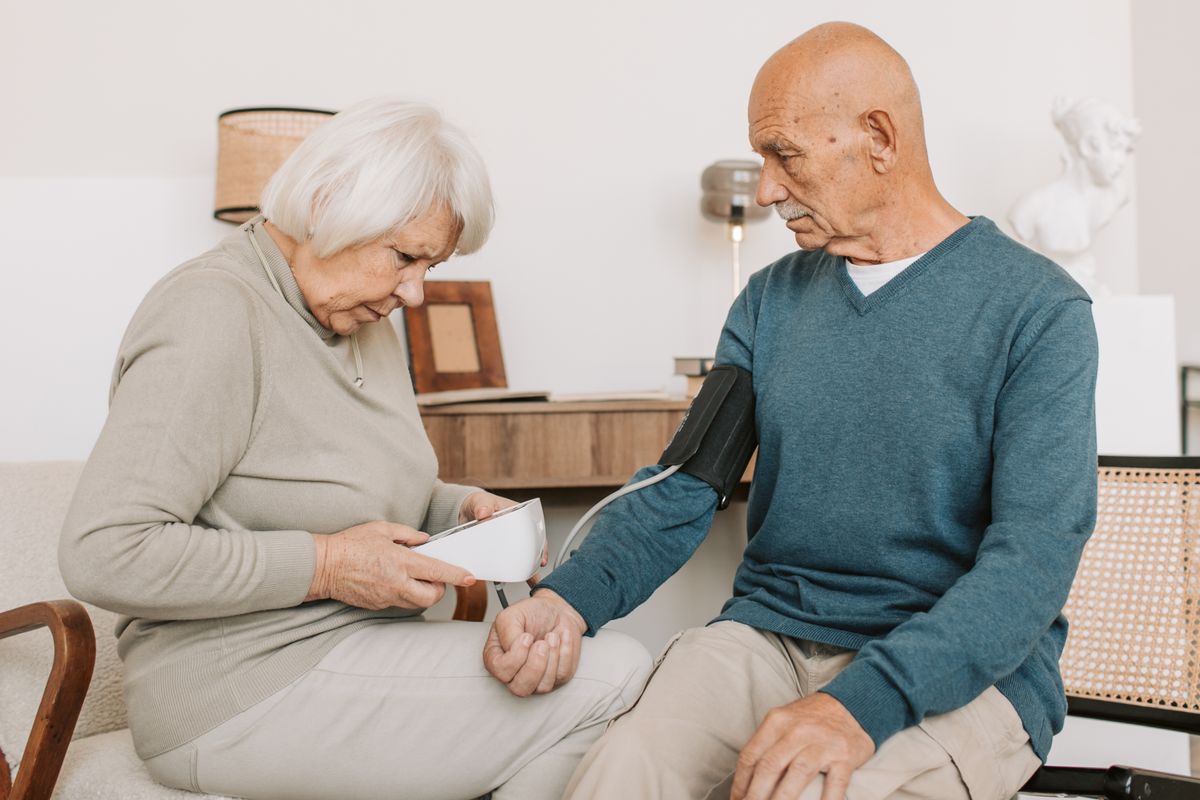
- Track it at home. A simple upper-arm cuff, used correctly (seated, feet flat, arm supported at heart level, no caffeine or exercise for 30 minutes before), gives the doctor far better information than a single reading in the office. Keep a log of the numbers.
- Guard the medication routine. High blood pressure has no symptoms, so it is easy for a parent to skip pills they do not feel the need for. A weekly pill organizer and a set time each day help. Our guide to organizing an aging parent's medications walks through a system.
- Take charge of the salt. Since you often do the shopping or cooking, you control most of the sodium. Cooking at home and buying low-sodium versions does more than any lecture.
- Encourage the daily walk, and make it something you do together when you can.
- Watch for dizziness and falls, and have your parent rise slowly from sitting or lying down. If they feel lightheaded on standing, or have a near-fall, tell the doctor. Our guide to fall prevention for seniors covers the wider picture.
- Keep the doctor in the loop. Bring the home readings and the medication list to every visit.
What an older adult with high blood pressure can and can't do
| Can do | Should avoid |
|---|---|
| Stay physically active with walking, swimming, cycling | Heavy lifting or straining with held breath |
| Eat a full, flavorful DASH-style diet | High-sodium processed, canned, and cured foods |
| Enjoy a rare drink | Regular or heavy alcohol |
| Live independently at home | Skipping blood pressure medication |
| Rise and change position slowly | Standing up quickly, especially after rest |
| Season food generously with herbs and spices | Adding table salt or salty condiments |
If the doctor has asked for readings at home, the technique decides whether they mean anything: cuff size, bare arm, five minutes seated, two readings a minute apart. Our guide to home health monitoring for elderly parents walks through the CDC's checklist and the wrist versus upper arm choice.
Frequently Asked Questions
Can elderly people with high blood pressure drink alcohol? It is best to limit or avoid it. Alcohol raises blood pressure and works against blood pressure medication, and in older adults it also increases dizziness and fall risk. The newest 2025 AHA/ACC guideline recommends avoiding alcohol to control blood pressure. An occasional drink is not a crisis, but regular drinking works directly against treatment.
What is the best exercise for seniors with high blood pressure? Steady aerobic activity like walking, swimming, or cycling, aiming for about 150 minutes a week, plus light resistance training a couple of times a week. Avoid heavy lifting or anything that involves straining and holding the breath, and get a doctor's okay before starting, especially after a period of inactivity.
What foods make high blood pressure worse? High-sodium foods are the main culprit: canned soups, processed and cured meats, salty snacks, pickles, and salty condiments like soy sauce and ketchup. Sugary drinks and excess red meat and full-fat dairy also work against blood pressure. Aim for under 2,300 mg of sodium a day, and ideally closer to 1,500 mg.
Can blood pressure medication cause falls in older adults? It can contribute. Blood pressure medicines, especially diuretics, can cause orthostatic hypotension, a sharp drop in pressure on standing that leads to dizziness and falls. This is not a reason to stop treatment, which is more important than the fall risk, but it is a reason to rise slowly and to report any dizziness or near-falls to the doctor so the plan can be adjusted.
What blood pressure is dangerous for an elderly person? A reading of 180/120 or higher is a medical emergency, called a hypertensive crisis, and needs immediate care. Beyond that, the right target is individual and set by the doctor, and in frail older adults it is sometimes a little higher to avoid the fall risk of pushing pressure too low. This is a conversation for your parent's physician, not a one-size-fits-all number.
A last word
High blood pressure does not have to shrink an older adult's life. A parent can stay active, eat well, and live independently, while limiting alcohol and salt, taking their medication faithfully, and moving with a little more care to avoid the dizziness that treatment can bring. That last point, the balance between controlling pressure and preventing falls, is what makes managing it in later life its own skill. Learn the signs, keep the home readings, lean on your parent's doctor, and the numbers usually come down without the quality of life going with them.
Sources
- American Heart Association, Limiting Alcohol to Manage High Blood Pressure.
- American Heart Association, 2025 High Blood Pressure Guideline: prevention and early treatment (recommends avoiding alcohol).
- American Heart Association, Shaking the Salt Habit to Lower High Blood Pressure.
- Mayo Clinic, DASH diet: Healthy eating to lower your blood pressure; NHLBI, DASH Eating Plan.
- Hypertension and orthostatic hypotension in the elderly: a challenging balance, The Lancet Regional Health Europe.