
High Cholesterol in Older Adults: What They Can and Can't Do
High cholesterol in older adults: foods to avoid, whether they can eat eggs, the grapefruit and statin interaction, and whether to take a statin after 75.
ElderHearth offers general information, not medical advice. Cholesterol treatment, especially whether to start or stop a statin in later life, is an individual decision. Never start, stop, or change a medication without your parent's doctor.
When a parent is told their cholesterol is high, the practical questions follow fast: what should they eat, what do they cut out, and do they really need a statin at their age? This guide answers exactly that for high cholesterol in older adults, the things they can and can't do, from food to grapefruit, plus how to help. As with high blood pressure and diabetes, later life adds a twist worth understanding: the decision to treat with medication is more individual after 75 than it is for a younger adult, and that changes the conversation.
The short version: an older adult with high cholesterol can eat a full, satisfying diet, stay active, and often live normally, while cutting back on saturated and trans fat, eating more soluble fiber, and, if they are on a statin, knowing which foods and drugs interact with it. Whether someone over 75 should take a statin at all depends on their history and overall health, and it is a decision to make with their doctor, not a given.
What foods should an older adult with high cholesterol avoid?
The foods to avoid with high cholesterol in an elderly parent are set by one lever: not cholesterol in food, but saturated and trans fat, which the body turns into LDL, the "bad" cholesterol. The American Heart Association's core advice is to lower saturated fat and replace it with unsaturated fat.
| Can enjoy | Best to limit |
|---|---|
| Oats, barley, beans, and other soluble fiber | Fatty and processed meats: bacon, sausage, salami, hot dogs |
| Fish, especially fatty fish like salmon | Butter, cream, and full-fat dairy |
| Nuts, seeds, olive and canola oil | Fried foods and baked goods with trans fat |
| Fruits and vegetables, whole grains | Palm and coconut oil, tropical oils |
| Skinless poultry, lean protein | Organ meats like liver |
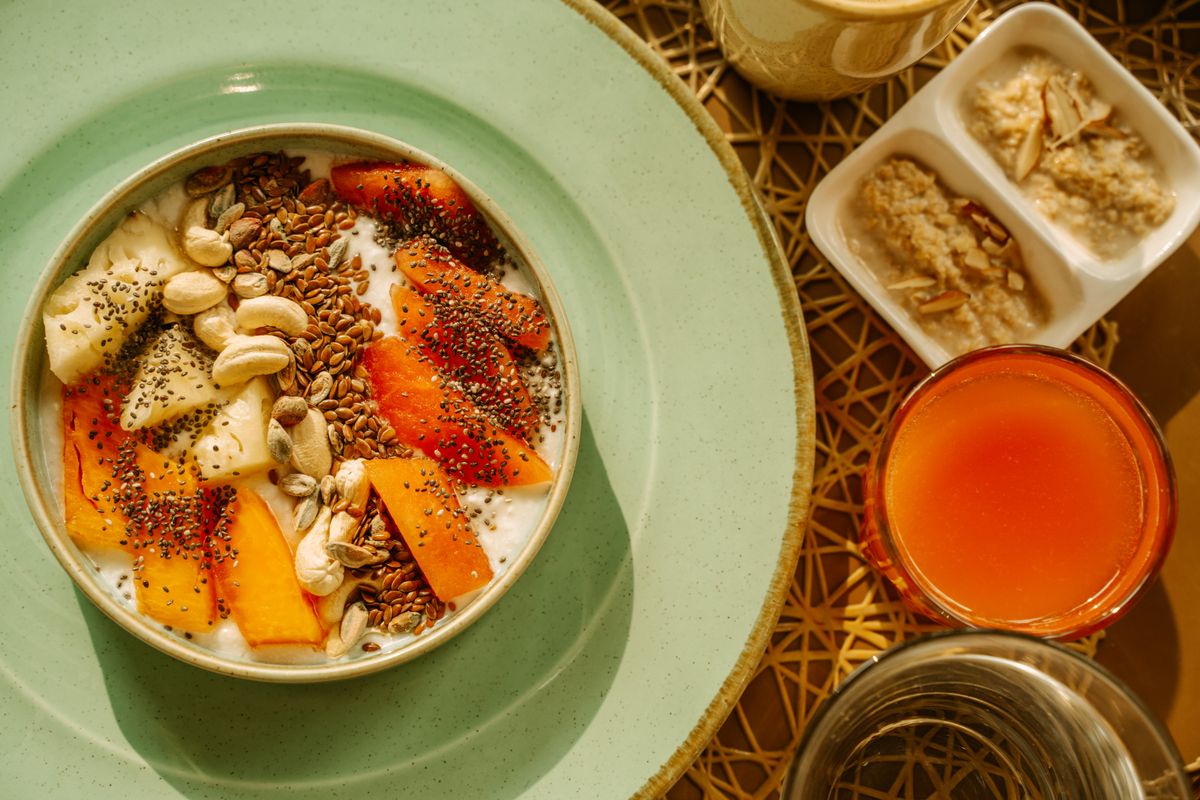
The most useful single habit is soluble fiber, the kind in oats, barley, beans, and apples, which actually blocks some cholesterol from being absorbed. MedlinePlus suggests aiming for around 10 to 25 grams a day. As with any older adult, do not over-restrict to the point of eating too little: the goal is swapping saturated fat for healthier fat and fiber, not cutting food.
Can an older adult with high cholesterol eat eggs?
Can an elderly parent eat eggs with high cholesterol? Yes, in moderation, which surprises many families who grew up being told eggs were the enemy. For most people, the saturated and trans fat in a meal raises LDL more than the cholesterol in the food itself, so an egg is not the problem a strip of bacon is. An egg a day fits most people's healthy pattern.
The honest caveat: individual response varies, and some people, including some with diabetes, are more sensitive to dietary cholesterol. So eggs in moderation are fine for most older adults, but a parent with diabetes or very high cholesterol should confirm with their doctor what fits their case.
What exercise helps lower cholesterol?
Exercise is genuinely useful here: regular activity raises HDL, the protective cholesterol, and lowers triglycerides. The general goal is about 150 minutes of moderate activity a week, such as walking, plus some resistance training. For an older adult, the same rules as always apply: start gently, build up, favor steady activity over heavy straining, and get the doctor's okay before starting something new. Even a daily walk moves the numbers in the right direction over time.
Can an older adult with high cholesterol drink alcohol?
In moderation. The specific concern with cholesterol is that excess alcohol raises triglycerides, a blood fat that travels with cholesterol and adds to heart risk. If a parent drinks, the usual limits apply: no more than one drink a day for women and two for men, and less is better for someone with high triglycerides. Alcohol also interacts with many medications, so it is worth asking the doctor or pharmacist in the context of their specific prescriptions.
Grapefruit and statins: the interaction to know
This one catches families off guard, and it is worth knowing precisely. Grapefruit and grapefruit juice interfere with how the body clears certain statins, letting the drug build up and raising the risk of side effects like muscle pain.
It matters for some statins and not others:
- Affected (limit or avoid grapefruit): atorvastatin (Lipitor), simvastatin (Zocor), and lovastatin.
- Not affected: rosuvastatin (Crestor), pravastatin, and pitavastatin (Livalo).
So whether your parent needs to give up their morning grapefruit depends entirely on which statin they take. Check the specific drug with their pharmacist rather than assuming. The same goes for other drug interactions: statins can interact with certain heart-rhythm and cholesterol medications, which is one more reason to keep an up-to-date medication list.
The older-adult twist: should someone over 75 take a statin?
Age is what separates cholesterol care in later life from the standard advice, and the difference is genuinely nuanced. The answer depends heavily on one distinction:
- If a parent has already had a heart attack, stroke, or known heart disease (called secondary prevention), the benefit of a statin is well established, and age alone is not a reason to stop.
- If a parent has never had a cardiovascular event (primary prevention) and is over 75, the evidence is much less clear. Major guidelines are deliberately cautious here: a moderate statin may be reasonable for some, but they call it an individualized decision, because the trials simply did not study the oldest adults well.
In later life, the other side of the ledger grows: statins can cause muscle aches, they add to the pile of daily pills (polypharmacy), and they interact with other drugs. For a frail parent with several conditions, or one with a limited life expectancy, guidelines even recognize that stopping a statin can be appropriate. None of this is a decision to make at home. The point is that "everyone over a certain age should be on a statin" is not how modern guidelines read, so it is a fair and important conversation to have with your parent's doctor.
How can I help a parent manage high cholesterol?
- Support the medication routine, if they take a statin, and keep an accurate, current medication list so the doctor and pharmacist can catch interactions.
- Watch for muscle pain or weakness. New, unexplained muscle aches after starting a statin are worth reporting, both because switching statins often resolves it and because muscle weakness raises the risk of a fall. Do not stop the drug on your own; call the doctor.
- Take charge of the cooking, since you often control the saturated fat: swap butter for olive oil, choose lean proteins and fish, and build meals around oats, beans, and vegetables.
- Check the grapefruit question against their specific statin with the pharmacist.
- Encourage the daily walk, ideally together.
- Bring the numbers and the medication list to appointments. Our guide to organizing an aging parent's medications helps, and because muscle side effects can affect steadiness, so does our guide to fall prevention for seniors.
High cholesterol rarely travels alone. Many older adults manage it alongside high blood pressure or diabetes, and the same heart-healthy diet and activity help all three at once.
What an older adult with high cholesterol can and can't do
| Can do | Should avoid |
|---|---|
| Eat a full diet rich in fiber, fish, and healthy fats | Saturated and trans fat: fatty meat, butter, fried food |
| Enjoy eggs in moderation | Treating every high-cholesterol food as forbidden |
| Stay active with walking and light strength work | Heavy straining without a doctor's okay |
| Keep grapefruit, if on a statin that does not interact | Grapefruit with atorvastatin, simvastatin, or lovastatin |
| Have a rare drink | Excess alcohol, which raises triglycerides |
| Ask whether a statin still fits after 75 | Assuming age alone decides it, either way |
Frequently Asked Questions
What foods should older adults with high cholesterol avoid? The main ones are foods high in saturated and trans fat: fatty and processed meats like bacon and sausage, butter, cream, full-fat dairy, fried foods, baked goods with trans fat, and tropical oils like palm and coconut. Replace them with unsaturated fats (olive oil, nuts), fish, and soluble fiber from oats, beans, and fruit.
Can an elderly person with high cholesterol eat eggs? For most people, yes, in moderation. Saturated and trans fat raise LDL cholesterol more than the cholesterol in food does, so an egg is not the problem it was once thought to be. Individual response varies, though, so a parent with diabetes or very high cholesterol should check with their doctor.
Can I eat grapefruit while taking a statin? It depends on the statin. Grapefruit interacts with atorvastatin (Lipitor), simvastatin (Zocor), and lovastatin, raising the risk of side effects, but not with rosuvastatin (Crestor), pravastatin, or pitavastatin. Check your parent's specific statin with the pharmacist.
Should people over 75 take statins? It depends. For an older adult who has already had a heart attack, stroke, or heart disease, a statin is well proven and age is not a reason to stop. For someone over 75 who has never had a cardiovascular event, the evidence is less clear and guidelines call it an individualized decision, weighing benefit against side effects and other medications. It is a conversation for their doctor.
What are statin side effects in older adults? The most common is muscle aches or soreness, which is also the usual reason people switch statins. Serious effects like muscle breakdown are rare. Older adults and women are somewhat more prone to side effects, and the risk rises with interacting foods (grapefruit) or drugs, so any new muscle pain or weakness should be reported to the doctor rather than treated by stopping the statin.
A last word
High cholesterol in later life is very manageable, and mostly with the same steps that help the whole body: more fiber and fish, less saturated fat, a daily walk, and attention to how any medication interacts with food and other drugs. The one idea worth carrying into the doctor's office is that a statin after 75 is a real decision, not an automatic one, clearly worthwhile for a parent with heart disease, and an individual call for one without it. Ask the question, keep the medication list current, watch for muscle aches, and let your parent's doctor tune the plan to the person.
Sources
- American College of Cardiology / American Heart Association, Cholesterol / Primary Prevention Guideline (statins over 75 as an individualized decision).
- National Lipid Association and American Geriatrics Society, Managing Hypercholesterolemia in Adults Older Than 75 Without ASCVD (expert consensus).
- Mayo Clinic, Statin side effects; Cholesterol: Top foods to improve your numbers.
- Cleveland Clinic, Do Statins and Grapefruit Safely Mix? (which statins interact).
- MedlinePlus, How to Lower Cholesterol with Diet (soluble fiber, saturated fat).